
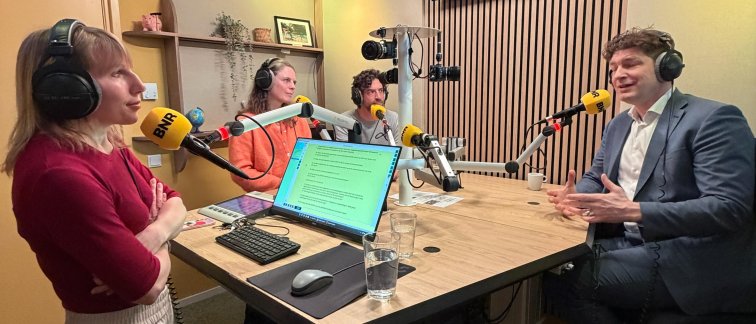
In the Netherlands, millions of people combine paid work with informal caregiving for a loved one, a challenge that will only grow as the population ages. Five million people provide informal care, and two million do so alongside a job. In the BNR podcast, Cécile Boot, Professor of Societal participation and Health at the department of Public and Occupational Health, Amsterdam UMC, and director of Amsterdam Public Health, discusses these challenges and the advice from the Social and Economic Council (SER) to make it easier to combine work and caregiving.
Caregiving is demanding
Cécile Boot explains that juggling work and caregiving can lead to overload, especially for those with less flexible jobs or lower incomes. Without solutions, people may reduce their working hours or leave the workforce altogether, which is undesirable from an individual (loss of income) and societal perspective (shortages in the labour market). “Caregiving is very demanding; you simply don’t abandon a loved one.”
Need for structural and integrated solutions
Although arrangements like care leave exist, they are rarely used and often unknown to employees and supervisors. These are mostly short-term solutions, while long-term caregivers need structural support. Boot emphasizes the importance of making caregiving an everyday topic of conversation at work, to facilitate conversations about this topic between employees and managers that often lead to positive outcomes. However, this is easier said than done, as in many workplaces this requires a change in organisational culture. Financial support is also crucial. “The real solution lies in an integrated approach on all fronts, work, social security and healthcare; otherwise, you risk a domino effect.”
Caregiving as normal as maternity leave
“It is my dream that the way society deals with providing informal care becomes just as normal as making arrangements when having children. In my ideal world, the support available for young parents and pregnant women would serve as a good example of how caregiving could be organized. Decent work enables you to take on other roles, that are crucial for our participation society. This responsibility should be shared between all stakeholders: workers, employers and the government. Caregiving happens to me, to you, to all of us, together we should anticipate and prepare for it and make sure there is a soft landing.”
Collaboration across ministries
Boot recommends an integrated approach, taking into account the professional healthcare sector as well, as both professional and informal care are reaching their limits. She pleads for more collaboration between the Minister of Health, Welfare and Sport and the Minister of Social Affairs, along with other ministries, since the issue also involves health disparities, labour market opportunities, and social security.