
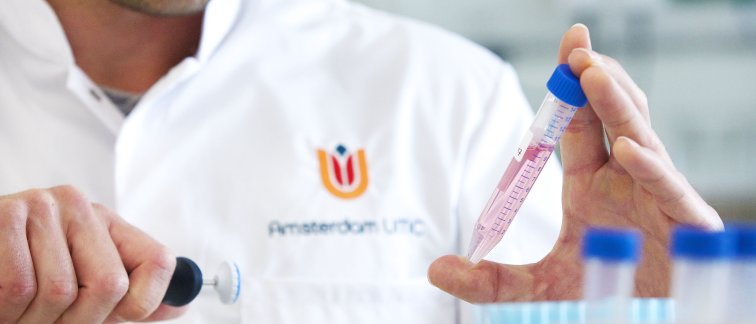
KWF is investing over 8 million euros in Amsterdam UMC - Cancer Center Amsterdam to support 11 promising and innovative cancer research projects. These projects span a wide range of topics, from cutting-edge organ-on-chip technology to pioneering psychosocial care, with a strong emphasis on both patient well-being and quality of life in the 2026 grant allocations.
Smart, personalized treatments
A substantial part of the funding will go towards innovative laboratory research, where patient tumors are analyzed using personalized chip models. For instance, Jan Paul Medema’s project is exploring new drug combinations for colon cancer. By selectively blocking the BCL-XL protein, the approach aims to target malignant cells while sparing healthy ones.
Plant enzymes for cancer therapy
Another standout project, led by Sandra van Vliet, investigates whether enzymes from edible plants can help destroy cancer cells by stripping away their protective layer. This could enable the immune system to better recognize and attack cancer cells. The research is made possible by funds raised through the annual Alpe d’HuZes event.
Emphasis on quality of life
Beyond medical innovation, there is a strong focus on the psychosocial aspects of cancer. The largest grant (nearly 5 million euros, awarded to Saskia Duijts’s project) will be used to improve inclusion in psychosocial cancer research. Underrepresented groups, such as older adults, people with lower socioeconomic status, those with rare cancer types, and individuals with psychological issues prior to diagnosis, will be actively involved. Their needs and experiences will be central, ensuring that care can be better tailored to each patient.
We can only develop appropriate support and care for all people with cancer if we actively involve them in research - Saskia Duijts
The other 8 cancer research projects receiving KWF funding:
- New Opportunities for Immunotherapy: Patient Tumors and Blood Vessels on a Chip (Marjolein van Egmond): Researchers create a chip with real pieces of tumor and artificial blood vessels to see if special immune cells can eliminate tumors. This way, they hope to better predict which patients will benefit from this treatment.
- Accelerating lncRNA-Targeted Therapies for HCC via Patient-Derived Organoid Models (Nicolas Leveille): This research seeks new vulnerabilities in liver cancer by studying special molecules in patient-derived mini-livers. This enables faster development of new, personalized treatments.
- Enhancing the Clinical Relevance of BATTLE-CLL with a 3D Lymph Node Model and Innovative Combination Therapies (Arnon Kater): This project examines whether new immune cell therapies combined with existing drugs work better against a type of blood cancer. They test this in a simulated lymph node to see if they can stop the disease.
- Facing Head and Neck Cancer Again (Femke Jansen): This research looks at how life and care needs change for people when their head and neck cancer returns. The aim is to ensure these people receive better support and information.
- Characterization of the Bone Marrow Microenvironment in Multiple Myeloma (Jeroen Guikema): Researchers create a simulated piece of bone marrow to discover why some cancer cells no longer respond to medication. They hope to find new ways to treat these cells.
- New Immunotherapy: Activating Neutrophils with Bispecific Antibodies for Better Treatment of Abdominal Metastases (Marjolein van Egmond): This research investigates whether the immune system can be helped to better tackle abdominal metastases, especially in people with a poor prognosis. They combine new and existing treatments to see if this works.
- POCOP: Establishing a Future-Proof Infrastructure for ‘Real-World’ Data Collection in Esophageal and Stomach Cancer (Hanneke van Laarhoven): This project ensures that data from patients with esophageal and stomach cancer are collected and used more efficiently. This allows doctors and researchers to continuously improve care.
- Optimization of the PACAP PROMs Infrastructure (Marc Besselink): This project improves the system for collecting experiences from patients with pancreatic cancer. This enables doctors to better consider what is important to the patient when choosing a treatment.