
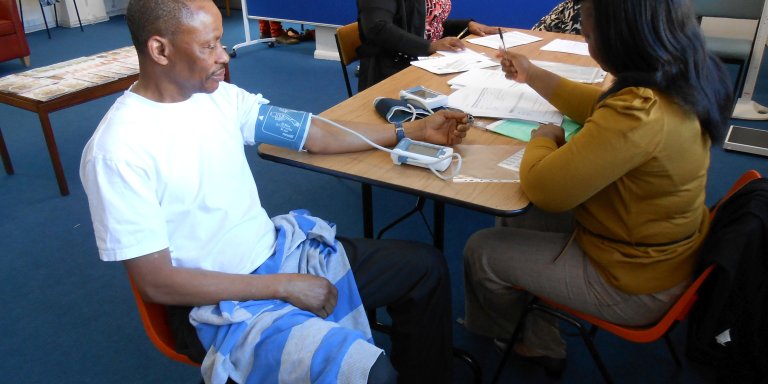
Research published today in Diabetologia by Amsterdam UMC and the University of Ghana reveals that type 2 diabetes manifests in two fundamentally different ways depending on a patient's body mass index (BMI). While type 2 diabetes in patients with a higher BMI is primarily driven by insulin resistance, the study demonstrates that in individuals within a lower BMI range, the condition is caused by the pancreas failing to produce sufficient insulin. Despite these opposing biological mechanisms, medical professionals currently treat both groups with the exact same medications.
Type 2 diabetes is generally seen as a disease associated with being overweight. In wealthy countries that picture holds true: nine out of ten people with type 2 diabetes are overweight. In Africa the situation is different. Almost four in ten African adults with type 2 diabetes are lean, with a normal or even low body weight. In some rural areas, such as in Ghana, it is as many as six in ten. First Author Sabrina Esmail: "This means that there are an estimated ten million lean patients on the African continent who do not fit the standard picture. For them, the problem is therefore a shortage of insulin, not a reduced response to insulin." Projectleader Charles Agyemang at Amsterdam UMC believes “this study shows that we need to look for better treatments for this large group of lean Africans."
A different disease process, so a different treatment too
Yet in Africa both groups are almost always given the same treatment, based on international guidelines: oral tablets such as metformin or sulfonylureas. These medicines, however, are mainly effective against insulin resistance, not against a shortage of insulin. They are therefore probably receiving the wrong treatment, and until now the consequences of this had not been investigated.
The researchers analysed data from more than 3,300 African adults with type 2 diabetes from Ghana, Nigeria, Kenya and Europe. "From this we concluded that lean patients more often develop eye damage, known as retinopathy, and strokes. People who are overweight, by contrast, more often have high blood pressure and an increased risk of cardiovascular disease. Chronic kidney disease occurred equally often in both groups," says senior author Felix Chilunga. The amount of body fat explained the greater part of these differences, which points to genuinely different disease processes. The risk factors differ as well: whereas being overweight is often linked to an unhealthy lifestyle, lean patients have more often experienced malnutrition or a low birth weight, which can disrupt the development of the pancreas.
Type 2 diabetes in lean Africans is therefore, biologically and clinically, a different type of disease from the one seen in people who are overweight. But it is still being treated as though it were the same. As a result, millions of people may not be receiving the right care. Chilunga: "We are calling for targeted clinical trials to determine which treatment works best for this large and often overlooked group of patients."
Africans in Europe
For Africans in Europe, too, it is very likely that a different treatment is needed. Another study with analysis from data from the UK Biobank showed that people of African descent with a BMI of 26 already have the same diabetes risk as Europeans with a BMI of 30. Studies of migrants in Europe consistently show that Africans are more likely to have type 2 diabetes, develop it around ten years earlier, and have poorer blood sugar control than the native population. Agyemang: "So a considerable proportion of African patients in Europe have a lower BMI but are treated according to guidelines written for the form of the disease found in people who are overweight, and their control is demonstrably worse. There is no reason to assume that the treatment mismatch we describe stops at the border."
This study was carried out by Amsterdam UMC, University of Ghana, the national Institutes of Health (Center for Research on Genomics and Global Health) via de cohorts AADM and RODAM. The findings were published today in Diabetologia.
Beeld: Karlijn Meeks


