
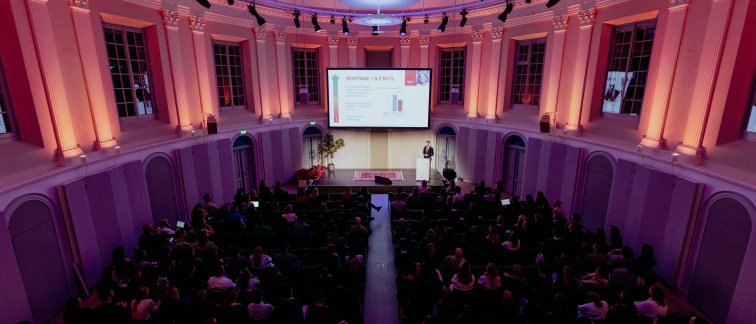
Just before the holiday season, nearly 300 passionate researchers gathered at the historic Felix Meritis in Amsterdam for the annual ACS Symposium. Researchers from all ACS programs and disciplines came together to share their latest findings, fostering new collaborations and sparking innovative ideas for the future of cardiovascular research.
Another great ACS year
The day started of with an introduction by ACS director Menno de Winther, who gave
an overview of the past and new year. The past year has been full of prize winners, grant recipients and new professorships. The year 2026 also promises to be a great ACS year, with interesting ACS event like the ACS PhD retreat (for which you can already register!).
Inspiring research & impact
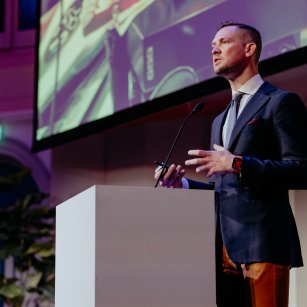
The first keynote lecture was given by Danny Cohn, who inspired the audience
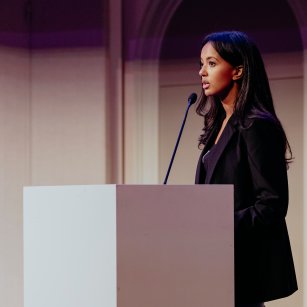
with the power of CRISPR for hereditary angioedema. Eva van Rooij, from the
Hubrecht Institute, gave a keynote lecture on ‘Identifying novel therapies for
genetic cardiomyopathy”. In the afternoon Harald Jørstad walked the audience
through his journey in sports cardiology and the impact he and his team have been able to make. In between the keynotes, ACS researchers were invited to give an oral presentation or pitch presentation of their work, based on their submitted abstracts.


Poster presentations & a special audience
During the poster sessions, abstract sumitters were able to present their work to all attendees. A special group of attendees were first-year Bachelor of Medicine students, who experienced their first exposure to scientific research through a course assignment in which they evaluated conference posters. The results of their poster assessments are presented below.
Winner: “Identification of putative causal genes and therapeutic targets for Thoracic Aortic Aneurysm and Dissection (TAAD)” by Julia Horjus et al.
During the symposium, we selected the poster“Identification of putative causal genes and therapeutic targets for Thoracic Aortic Aneurysm and Dissection (TAAD)”by Julia Horjus et al. as the best. The researchers combined large-scale GWAS data (14,409 TAAD patients and over 1.2 million controls) with multi-tissue molecular traits to discover new genetic risk factors. The central research question was which genes truly contribute causally to the development of TAAD.
We chose this poster because of its strong scientific structure. Integrative analyses such as multi-group cTWAS and Mendelian randomization were used not only to find associations but also to infer potential causality and effect direction. The identification of 28 putative causal genes and their connection to druggability databases makes this research highly relevant for future therapies. What impressed us most was the translation of complex genetic data into concrete clinical opportunities. One insight that stayed with us:“Majority of genes are identified through aortic tissue,”highlighting the value of tissue-specific genetic analyses.
Shared second place: The Prevalence and Association of Pulmonary Hypertension in Thoracic Aortic Surgery: A Retrospective Analysis using Dutch National Registry Data” (Y. Aouragh et al.)
The poster “The Prevalence and Association of Pulmonary Hypertension in Thoracic Aortic Surgery: A Retrospective Analysis using Dutch National Registry Data” (Y. Aouragh et al.) was selected as one of our second-place winners. The research question was: What is the prevalence and association of pulmonary hypertension in thoracic aortic surgery? The poster explores the factors that contribute to pulmonary hypertension, which patients are affected, and what the consequences are.
We appreciated this poster for its clarity and accessibility. The topic is immediately understandable at a glance, the results are clearly presented in graphs, and the concise text makes it approachable. Good use of contrasting colors also made the poster visually appealing. Overall, the poster maintained structure and readability. It immediately caught our attention because of its visual appeal and clear structure, and the topic was familiar to us from previous assignments.
Shared second place: “Use of Simple Cognitive Screening Tools to Identify Risk of Postoperative Delirium in TAVI Patients”(Maud I.L. de Groot et al.)
The poster “Use of Simple Cognitive Screening Tools to Identify Risk of Postoperative Delirium in TAVI Patients” (Maud I.L. de Groot et al.) was another second-place winner. The study investigated whether simple cognitive tests, such as the MMSE and MoCA, could identify which TAVI patients are at increased risk of postoperative delirium.
We chose this poster for its clear research question and direct clinical relevance. The results showed that patients with cognitive impairments before the procedure have a significantly higher risk of delirium. The poster presented these findings clearly, using graphs that effectively highlighted the differences in incidence.
What impressed us most was the practical applicability: simple screening tools could help identify patients who need extra attention early on, making the study both practical and impactful.
Shared second place: “CLEAR: Coverage of the Left Subclavian Artery during Thoracic Endovascular Aortic Repair” (Daan Udding et al.)
The poster “CLEAR: Coverage of the Left Subclavian Artery during Thoracic Endovascular Aortic Repair” (Daan Udding et al.) addresses an important clinical question in the treatment of blunt thoracic aortic injury (BTAI): Is covering the left subclavian artery (LSA) during TEVAR necessary, and what risks does it pose?
The study compared complications between patients whose LSA was covered and those whose LSA was not. Results were striking: LSA coverage was associated with a higher incidence of left arm ischemia and a greater need for revascularization, while other stent-related complications were not more frequent. This suggests that routine LSA coverage is not always necessary for effective proximal sealing.
We found this poster strong due to its clinical relevance and clear data presentation, including tables and visual reconstructions. What appealed most was its immediate applicability: the findings can help physicians make more informed decisions balancing optimal sealing and minimizing ischemic risk.



Awards Ceremony
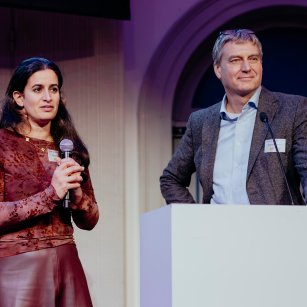
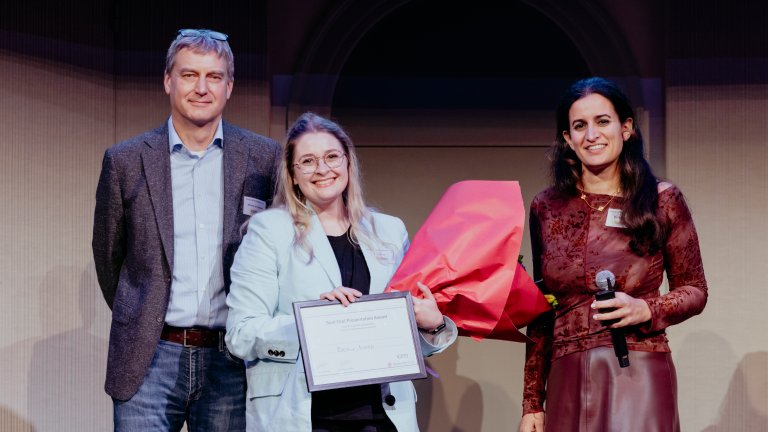
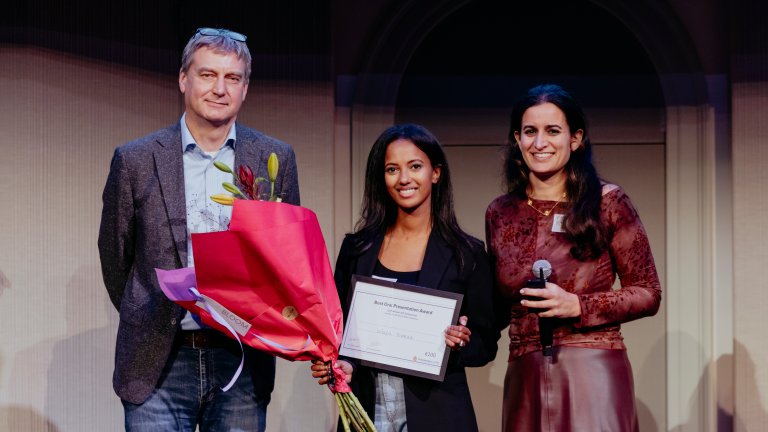
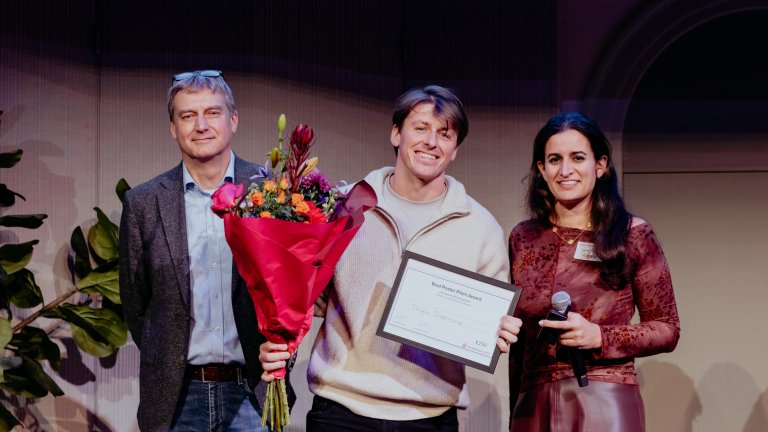
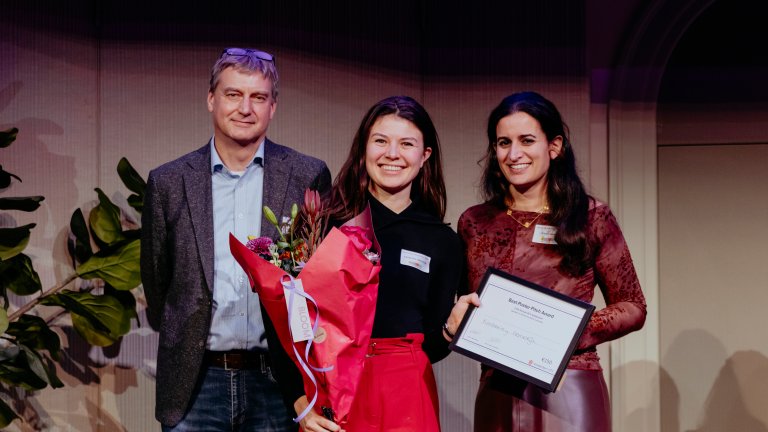
The day would not be complete without an award ceremony. Directors Ronak Delewi and
Menno de Winther announced the prize winners for best oral presentation and best pitch presentation. After a round of voting, the prizes for the best publication award could also be announced. Last but not least, the results of the ACS Out of the Box Grants (OOTB) 2025 were announced. Read more about the prize winners below and about the OOTB awardees here.
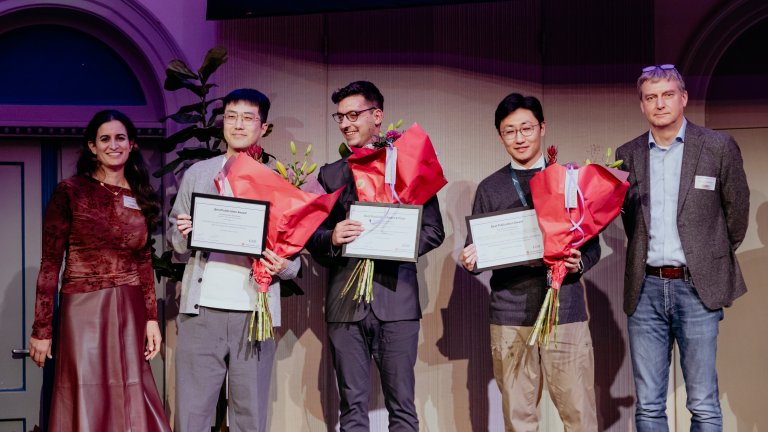
Best publication award:
Out of all submissions three best publications were chosen:
- Xin Hu - The innate immune receptor NLRX1 is a novel required modulator for mPTP opening: implications for cardioprotection
- Jianan Wang - SCN10A-short gene therapy to restore conduction and protect against malignant cardiac arrhythmias
- Rocco Calliandro - Living myocardial slices as a model for testing cardiac
pro-reparative gene therapies
All three gave a pitch on their publication & a winner was selected by the audience. Congratulations Rocco on giving the best pitch!
We would like to thank the organizing committee for their efforts in organizing this great edition of the symposium: Annette Neele, Charissa van der Brom, Elena Rampanelli, Jeffrey Kroon, Vincent Christoffels & Vincent Jongkind. We are looking forward to this year's symposium on 10 December 2026.
All pictures were made by Joyce van Doorn.