
Amsterdam UMC - Cancer Center Amsterdam has recently welcomed its 100th visiting hospital for training and observation in robotic Whipple surgery for pancreatic disease. The milestone reflects the growing international demand for expertise in this highly complex procedure, used to treat cancer and cysts in the head of the pancreas.
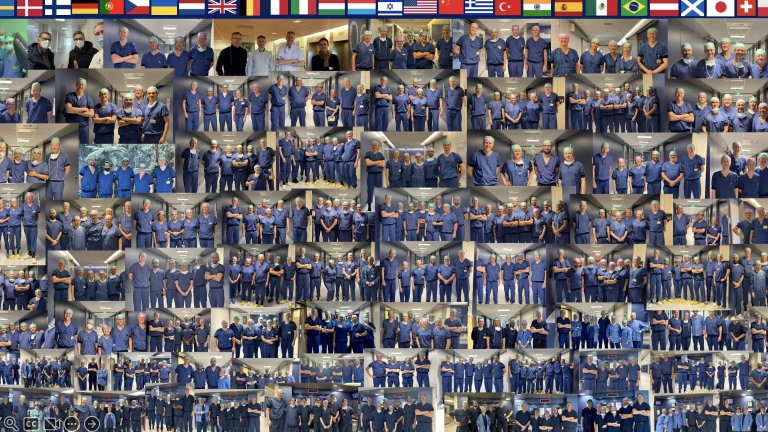
Over the past four years, hospitals from 31 countries have visited Amsterdam UMC to learn from its surgical team. While most visitors came from Europe, surgeons and operating room staff also travelled from countries including the United States, Brazil, India, China, Japan and Australia.
International centre of expertise
The Whipple procedure (pancreaticoduodenectomy) is one of the most challenging operations in abdominal surgery. Using three Da Vinci® surgical robots, Amsterdam UMC performs the procedure with high precision, helping to reduce blood loss, complications and recovery time for patients.
“More and more hospitals want to perform the Whipple procedure robotically to reduce the impact of such major surgery on patients,” says Rawin Amiri, PhD candidate in robotic surgery. “What makes Amsterdam UMC unique in Europe is that we routinely perform two robotic Whipple procedures every Monday. Very few centres worldwide perform this procedure at such scale and frequency.”
Structured European training programme
Amsterdam UMC has established a structured European training programme for robotic Whipple surgery, combining observation, simulation training and supervised procedures in surgeons’ own hospitals. The programme is accredited by the European professional association E-AHPBA.
“By offering structured training, we help ensure that patients are not exposed to the risks associated with a surgical learning curve,” says Marc Besselink, professor of surgery. “For this highly complex procedure, experience, standardisation and proper training are essential.”
“We have already supervised robotic Whipple procedures in 30 major European hospitals,” adds surgeon Freek Daams. “There is a strong demand for structured training in robotic surgery, and it is rewarding to see Amsterdam UMC playing a leading role in this field.”