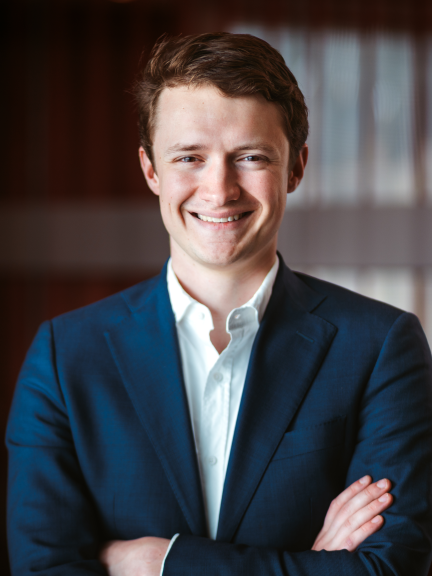
The Dutch Heart Foundation has awarded ACS scientist Nick van Es, Annelies van der Hulst, Jentien Vermeulen and Tijn Heeringa with a Dekker grant. Dekker grants are personal research grants for talented scientists that are awarded annually. With the grant, the Heart Foundation enables researchers to take the next step in their careers. The Dekker grant helps the to set up and expand their own research line in the field of cardiovascular research.
Nick van Es
‘Assessing the Risk of Cardiovascular Disease in Cancer Patients Using Existing CT Scans

People who have or have had cancer are at increased risk for cardiovascular disease. This risk does not always receive enough attention. Van Es is developing a smart computer program that analyzes CT scans to automatically detect calcium deposits in the blood vessels near the heart.

Calcium as a Warning Sign
“Calcium in the coronary arteries—the arteries that supply the heart with oxygen-rich blood—is a sign of atherosclerosis. High levels of calcium may indicate an increased risk of cardiovascular disease,” explains Nick van Es. Calcium can be detected on a CT scan. Currently, an accurate calcium measurement usually requires a separate CT scan of the heart. That costs extra money and is stressful for the patient. The heart is also visible on the chest CT scans performed for cancer care. However, it is difficult and time-consuming to manually determine the amount of calcium on those scans.


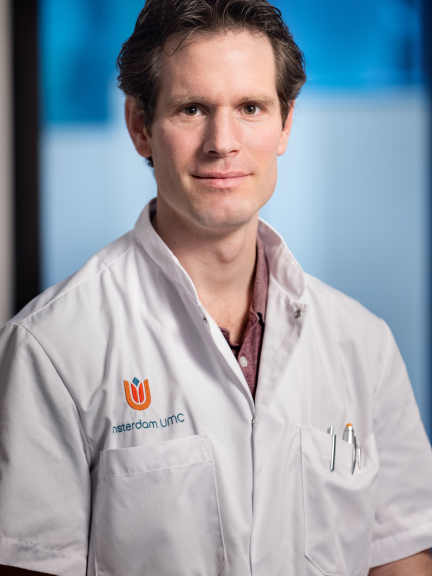
Annelies van der Hulst

'Better Prepared for the Birth of a Baby with a Heart Defect Thanks to MRI'

Pediatric cardiologist Dr. Annelies van der Hulst will investigate whether an MRI can help determine more accurately what care a baby with a congenital heart defect needs immediately after birth. This could reduce unnecessary cardiac care and stress for both parents and the baby.

In the Netherlands, approximately 1,400 children are born each year with a congenital heart defect. Despite significant improvements in treatment, babies still die from congenital heart defects. Accurate information during pregnancy is vital. An ultrasound around 20 weeks of pregnancy often provides clarity. However, in about 30 percent of cases, it remains unclear what care the baby will need after birth.


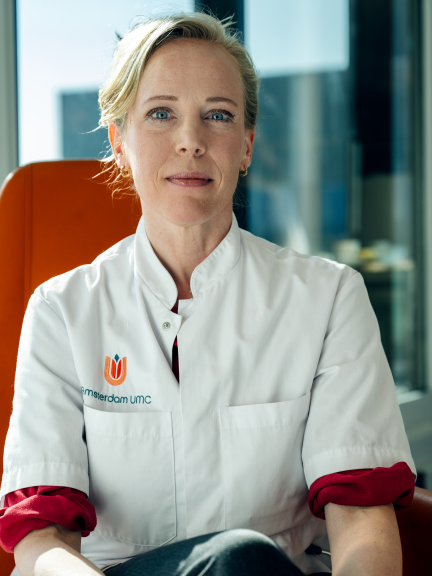
Jentien Vermeulen

'Early Intervention for Cardiovascular Disease in People with Psychosis'

People with psychosis are at increased risk for cardiovascular disease, but these often young individuals are frequently identified too late. Psychiatrist Dr. Jentien Vermeulen is researching who is at increased risk. She is developing a calculation tool that will enable healthcare providers to screen these individuals earlier. Together with patients, she translates these findings into an appropriate treatment plan.

A Risk That Is Recognized Too Late
Cardiovascular problems often develop later in life. But risk factors for these diseases have been present in people with psychosis for decades. These include smoking, lack of exercise, being overweight, or high levels of sugar and cholesterol in the blood. Existing predictive models for cardiovascular disease do not work well for younger people. People who develop psychosis are often young. As a result, their risk is underestimated, and measures to prevent cardiovascular disease come too late.

Jentien Vermeulen: “Ultimately, we hope this research will lead to more healthy years of life and better care for people who are currently too often left behind.”

Photo: Bruno van der Kraan

Tijn Heeringa

'How Do We Ensure the Safety of a Rare Heart Surgery?'

New medications may mean that patients with a thickened heart muscle no longer need to undergo complex open-heart surgery. That’s good news, but it also means that such surgeries are becoming less common. Physician-researcher Dr. Tijn Heeringa is investigating how much experience hospitals and surgeons need to continue performing this procedure safely and in a way that is future-proof.

Faster Solutions for Patients
Scientific research is urgently needed to prevent people from dying or becoming ill—and increasingly so—due to cardiovascular disease. Through its personalized Dekker Grants, the Dutch Heart Foundation therefore connects top talent to cardiovascular disease research. The selection process for a Dekker Grant is rigorous: both the quality of the researcher and the quality of the research are evaluated. Through these grants, the Dutch Heart Foundation enables researchers to engage in long-term scientific research on cardiovascular diseases. This allows them to take the next step in their careers as researchers. The Dekker Grant helps them establish and expand their own line of research.

About the Dekker grants

The Dekker grants are named after Dr. E. Dekker, former director of the Dutch Heart Foundation. He was the initiator in the Netherlands of civilian assistance in the event of a cardiac arrest. Dekker grants are personalized grants for talented cardiovascular researchers at various stages of their careers. These grants attract top talent and helps them building their own line of research in the cardiovascular field.

For more information on the awarded Dekker Grants, you can visit this page.

Source: Dutch Heart Foundation