PhD candidate Loth Webbink from the ENT Department (Tumor Biology and Immunology) at Amsterdam UMC received a Cancer Center Amsterdam (CCA) travel grant to visit the Clinical-oMx lab in Brisbane, Australia. During this research stay, Loth immersed herself in spatial omics and data analysis in head and neck cancer. Below, she shares her personal story about the experience in Brisbane and the research conducted during this visit
In 2024, I started my PhD at the ENT department, in the Tumor Biology and Immunology research group. My project focuses on the immunosuppressive tumor microenvironment in head and neck cancer. During the project, we worked on a spatial transcriptomics experiment, a technique that enables measuring gene expression in a selected region of a marked tissue slide. Within our research group, there was no prior experience with this technique. After a period of setting up, optimising, and validating the experiment, we collected the data and data analysis could begin. Because computational analysis was a relatively new field for me, I was trying to find my way to get most out of the dataset. This seemed like a good moment to seek help from a lab with more experience in this field.
Collaboration with the Clinical-oMx Lab in Brisbane
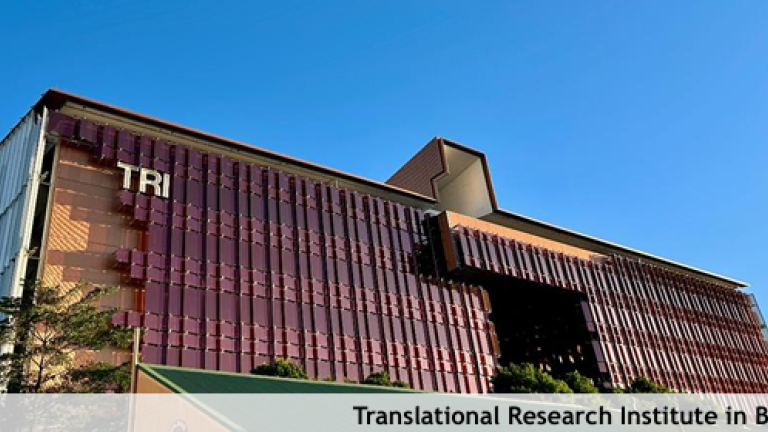
At a conference, my supervisor met dr. Arutha Kulasinghe from the Clinical-oMx lab in Brisbane, Australia. His lab is internationally recognised as a pioneer in the field of spatial omics analysis, making it the perfect lab to help me with my analysis. He was enthusiastic about inviting me to his lab at the Translational Research Institute in Brisbane, and thanks to the CCA travel Grant, I was able to accept his invitation. Under the guidance of the Clinical-oMx team, I learned more about computational biology and the best way to analyse our dataset.
Learning the analysis pipeline and preprocessing the data
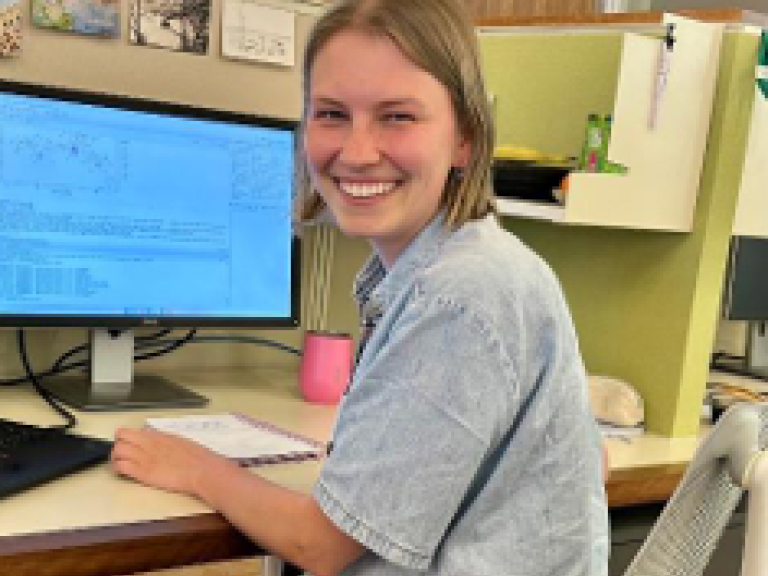
I went to Brisbane for two months. I spent the first week reading about the pipeline developed by the team for this type of data, and getting to know the people in the lab. I then continued by writing a script so I could apply their analysis pipeline to our dataset. I had weekly meetings to discuss progress and receive feedback, and there were always people from the team available to help me in between. We mainly focused on preprocessing the data, in order to run the analysis on a clean, reliable dataset. There was also enough time for me to delve into every step of the pipeline, which allowed me to fully understand the analysis. During the last few weeks, we focused on the downstream analyses that are possible with the dataset. We will continue this phase after my return through online meetings and email contact. It was great to be able to discuss the results with people who know exactly what to look for with this type of data, which made this a valuable learning experience.
Personal development and future perspectives
Besides learning a lot about data analysis, this experience also contributed to my personal development. It was great to step out of my daily routine for a while and be able to focus completely on this part of the project. I was able to see and experience how things work in another lab, and I met many different people who I hope to see again in the future. This experience made me think more about the direction of my future research career.
Exploring Brisbane and the Australian Coast
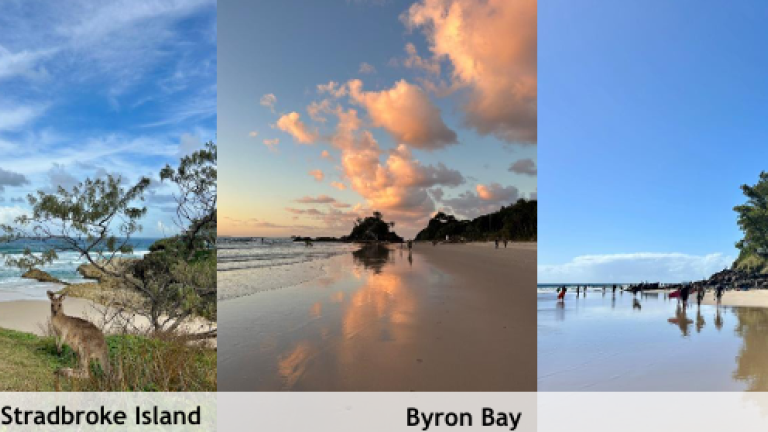
Outside working hours, I of course took the time to explore Brisbane and its surroundings. During the weekends, I often went to the coast to enjoy coastal walks, surfing, and snorkelling. I also saw a lot of wildlife: kangaroos, whales, sea turtles, and even a shark. It was an unforgettable experience!