
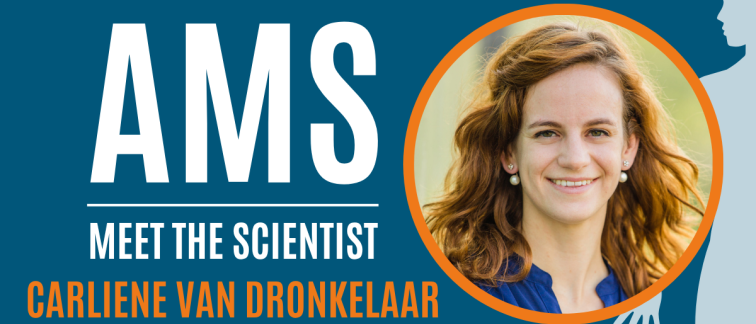
In our series of 'Meet the AMS scientist', we shine the light on outstanding AMS researchers and dive into their background, what drives them, what their work brings them and what they bring to their work. These interviews are also shared on the AMS LinkedIn account, feel free to share within your network!
Not every setback is the end of the story. Sometimes, it is simply the beginning of a different one. For Carliene van Dronkelaar, some of the most defining moments in her career came when things did not go according to plan. Whether it was not being accepted into the dance academy she had dreamed of attending, or seeing a carefully planned research trial disrupted by the COVID-19 pandemic, these unexpected turns ultimately led to opportunities and insights she could never have anticipated.
Long before she became a researcher, Carliene envisioned a very different future. As a dancer, she spent years preparing for admission to a dance academy. Encouraged by her parents to have a backup plan, she enrolled in Dietetics while continuing to audition. Although she was not accepted into the academy, it opened the door to an entirely different passion.
During her studies, Carliene discovered an intrigue for the relationship between nutrition, disease, and the human body. After completing a master’s degree, she realized that research suited her even better than clinical practice. Rather than choosing between science and patient care, she found a way to combine both through practice-oriented research.
This path eventually led to her PhD (that she recently succesfully defended), where she focused on improving nutritional and exercise care for older patients at risk of malnutrition during and after hospitalization.
Malnutrition is common among hospitalized older adults and can have serious consequences for recovery, physical functioning, and the risk of readmission. Although patients are routinely screened for malnutrition when they are admitted to hospital, Carliene and her colleagues saw opportunities to improve the care that follows. Together with healthcare professionals from multiple disciplines, they developed an intensive intervention that extended beyond the hospital walls.
Years of preparation went into designing the study. Focus groups with dietitians, physiotherapists, nurses, and other healthcare professionals helped ensure that the intervention would fit daily clinical practice. Everything was ready to begin. Then the COVID-19 pandemic arrived.
Carliene and her team had to return to the drawing board, redesigning the study to fit the new reality. Even after research resumed, recruiting participants proved far more difficult than expected. Patients were understandably overwhelmed during the first days of admission or reluctant to receive additional visitors at home during the pandemic. Eventually, the team had to end the study earlier than planned because they could not include enough participants.
For many researchers, that could have felt like failure. For Carliene, it became one of the most valuable parts of the journey.
Together with international colleagues facing similar challenges, Carliene contributed to new ideas about how practice-based healthcare research could be designed more effectively. At the same time, the intervention itself left a lasting imprint. Many of the educational materials developed during the project, including resources available through Voeding & Beweging NU, continue to support patients and healthcare professionals today.
The project also generated entirely new research questions. Because the team screened more than 2,600 patients for malnutrition over two years, they were able to perform additional analyses that had never been part of the original research plan. These findings contributed to ongoing discussions about how malnutrition should be identified and diagnosed in hospital care.
Looking back on Carliene’s journey and her research, neither followed the path she had originally imagined. Yet both can teach the same lesson: meaningful progress rarely happens in a straight line. Sometimes plans need to change to make room for opportunities you never expected.
Find the article also on our LinkedIn.
Written by Elianne Prange (Communication Officer AMS)