

Antibiotics may be an effective preventive treatment for people at high risk of recurrent tuberculosis (TB) in sub-Saharan Africa. Such an approach could help avoid up to 100,000 TB cases annually. Researchers at Amsterdam UMC will investigate whether this is truly the case, in close collaboration with doctors, scientists, universities and other organizations in sub-Saharan Africa. The RECENT‑TB project is led by Amsterdam Institute for Immunology & Infectious Diseases (AI&I) and Amsterdam Public Health (APH) researcher Dr. Sabine Hermans, who is also a member of AI&I’s Collaboration & Synergy Committee.
Preventive antibiotics for TB
An estimated 10 percent of people successfully treated for TB in sub-Saharan Africa develop TB again within two years, up to 200,000 people per year. The RECENT‑TB project will investigate whether preventive antibiotics after completing TB treatment prevents this from happening. The study will start this coming September in urban neighborhoods in Uganda and South Africa where TB is highly prevalent.
Affordable and targeted prevention
'If someone has had TB once, their risk of getting it again is much higher,’ explains Dr. Hermans, principal investigator, internist‑infectious diseases physician and epidemiologist in the Global Health department of Amsterdam UMC. This high‑risk group accounts for roughly 5 to 30 percent of all TB patients worldwide but is currently not covered by existing guidelines. ‘My goal is to identify an effective preventive strategy which can be tailored according to level of risk, and for this strategy to be provided in a way that is acceptable, affordable and practically feasible.’
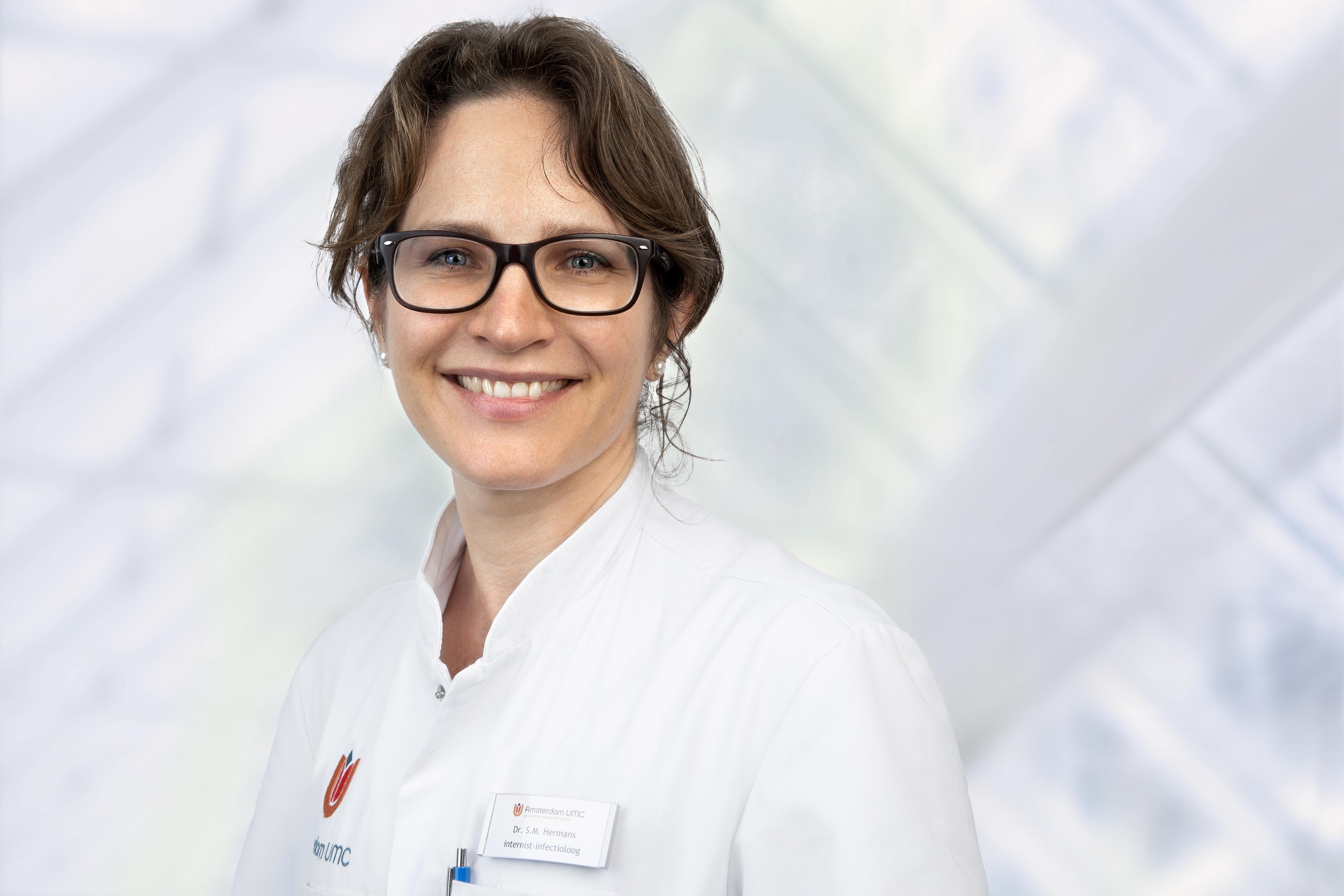
'People who have successfully completed TB treatment remain at much higher risk of developing the disease again, yet this high-risk group has largely been overlooked in research and prevention policies. Through RECENT-TB, we aim to identify an effective preventive strategy that can be tailored to an individual's level of risk and delivered in a way that is acceptable, affordable and feasible. We hope this will help ensure that completing TB treatment truly marks the end of a person's TB journey.'
From clinical trial to routine care
Embedded within the clinical trial is an evaluation of the implementation context of secondary preventive treatment. RECENT-TB will also study the potential of various simple tests to identify patients at the highest risk of recurrence, which will be used to develop an individual risk score, and conduct a cost‑effectiveness analysis, so preventive therapy can be targeted to those who benefit most. If the project succeeds in halving the number of recurrent TB cases in sub-Saharan Africa, up to 100,000 recurrences per year could be prevented.
Long-standing collaboration and capacity building
RECENT-TB is funded by a 2.4 million euro grant from Global Health EDCTP3, part of Horizon Europe, awarded to Amsterdam UMC and the Amsterdam Institute for Global Health and Development (AIGHD). It is a collaboration with the Infectious Diseases Institute at Makerere University in Uganda, Stellenbosch University in South Africa and the University of St Andrews in Scotland, as part of a long-standing collaboration between these institutes. An integral part of the project is capacity building of junior researchers in both the Global South and the Global North, with two PhD students and two postdoctoral fellows to be trained through the project.
Dr Vanessa Harris, researcher at AI&I and APH, also received a €5.8 million grant from the European and Developing Countries Clinical Trials Partnership (EDCTP) in the same funding round to investigate whether two widely available antibiotics, azithromycin and ciprofloxacin, can reduce death and hospitalization in children who have both acute watery diarrhoea and malnutrition.
Learn more about the TB research of Dr. Sabine Hermans:
Reducing Exposure to TB Alone May Not Be Enough to Prevent Disease (30.09.2025)
Header image: Adobe Stock