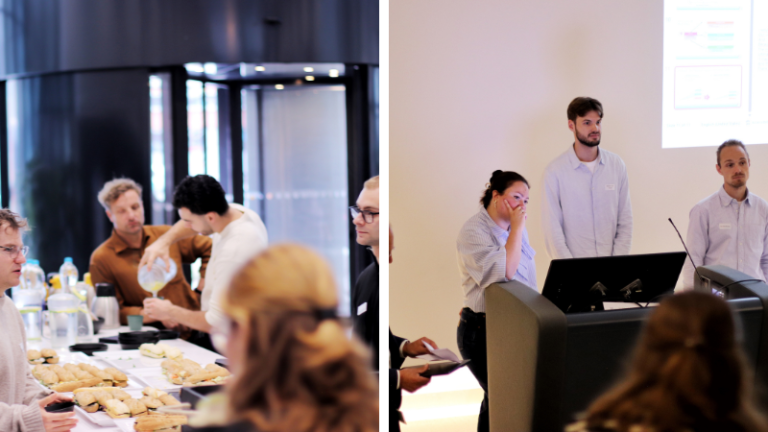
How can movement help us not only recover from illness or injury, but also maintain our health, independence and resilience as we age? On 26 October, researchers and experts came together for the symposium Resilient Ageing Through Movement: From Prevention to Rehabilitation to discuss these topics.
As populations age and healthcare systems face increasing pressure, understanding how people can maintain their physical and mental capacities becomes more important than ever. Traditionally, movement research has often focused on restoring function after illness or injury. But what if movement could play an equally important role in preventing decline before it occurs?
This shift in perspective formed the central theme of the symposium, organised by the AMS Ageing and Vitality research programme. Bringing together expertise from rehabilitation medicine, public health, epidemiology and biological ageing, the afternoon explored how these different disciplines can contribute to a shared understanding of healthy ageing.
From biological mechanisms to everyday movement
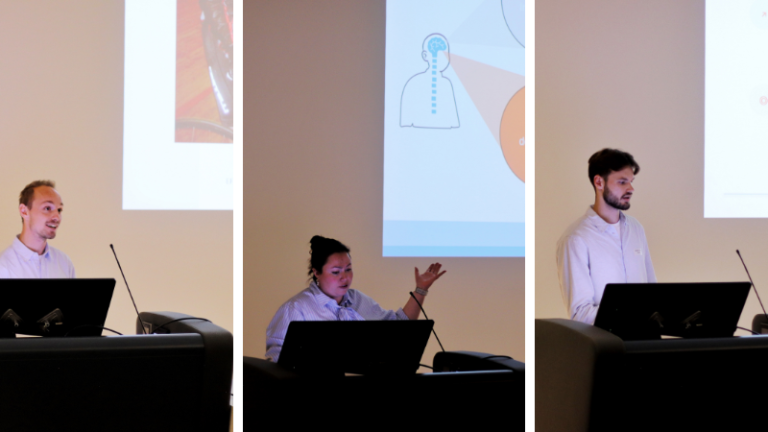
The afternoon began with three pitches by AMS researchers Dax Houtkamp, Arianne Gravensteijn and Herbert van Essen, showcasing the breadth of research within the Ageing and Vitality programme.
Their presentations explored how biological ageing can be measured, how everyday movement relates to metabolic health, and how exercise could help address factors contributing to disability progression in people with multiple sclerosis.
Looking beyond disease: What does it mean to age well?
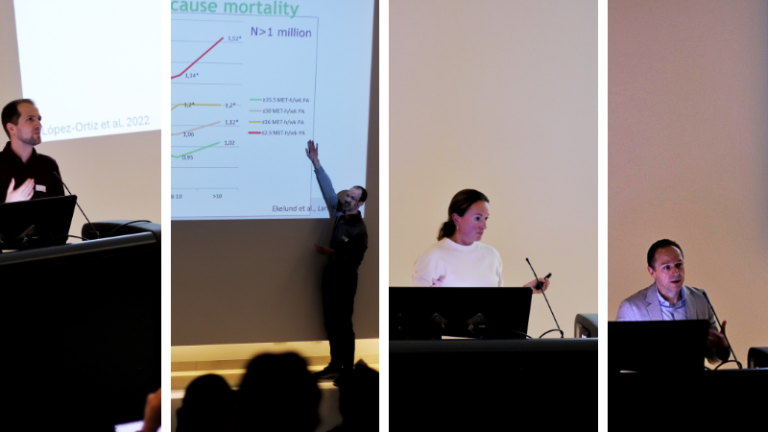
Dr. Wouter Vints opened the plenary lectures by exploring the relationship between healthy ageing and rehabilitation. Drawing on the World Health Organization's concept of intrinsic capacity, he challenged the audience to look beyond individual diseases and consider the physical and mental capacities that enable people to function in daily life.
Being free from disease does not necessarily mean being able to live the life you want. Equally, living with a disability does not automatically mean losing independence or meaningful participation.
The central question is therefore not only what someone is physically capable of doing, but also what matters most to that person.
Every movement counts
Prof. Hidde van der Ploeg approached healthy ageing from a public health perspective, highlighting the importance of physical activity and sedentary behaviour.
His presentation offered an important reminder: physical activity is much broader than sports or structured exercise. Walking to the shops, cycling to work or simply moving around during the day all contribute to an active lifestyle. He emphasised that the greatest relative health gains are often achieved when people move from doing no physical activity to doing at least a little.
Promoting healthy ageing does not always require major lifestyle changes. Sometimes, small changes in everyday behaviour can make a meaningful difference.
Understanding the capacities behind healthy ageing
A/prof. Laura Schaap returned to the concept of intrinsic capacity, this time from an epidemiological perspective.
Rather than treating ageing as a uniform process, her research examines the different trajectories people follow. Physical mobility, cognition, psychological well-being, sensory functioning and vitality do not necessarily decline at the same rate.
She also emphasised that healthy ageing cannot be understood by looking at the individual alone. The physical and social environment plays an essential role in determining whether people can continue doing the things they value.
From muscle health to functional resilience
The final plenary lecture, delivered by Prof. Ivan Bautmans, brought the discussion back to the biological mechanisms underlying ageing.
Focusing on sarcopenia, inflammation and muscle health, Bautmans explored how biological changes influence physical functioning and resilience later in life.
Bautmans highlighted the importance of understanding vitality as more than the absence of frailty. Rather than focusing exclusively on deficits, a capacity-based approach may help researchers identify changes in functioning across the entire ageing process.
This perspective also creates opportunities to better understand resilience: why some people maintain or regain their functioning despite physiological challenges, while others experience greater decline.
Connecting disciplines
How can biological markers become meaningful tools for prevention? How can rehabilitation and public health learn from one another? And how can scientific insights be translated into interventions that help people maintain their independence and quality of life?
These questions offer opportunities for future research and collaboration within Amsterdam Movement Sciences and beyond.
The symposium concluded with an opportunity to continue the conversations on these topics during an informal networking reception.
A warm thank you to all speakers, researchers and participants who contributed to an inspiring afternoon.