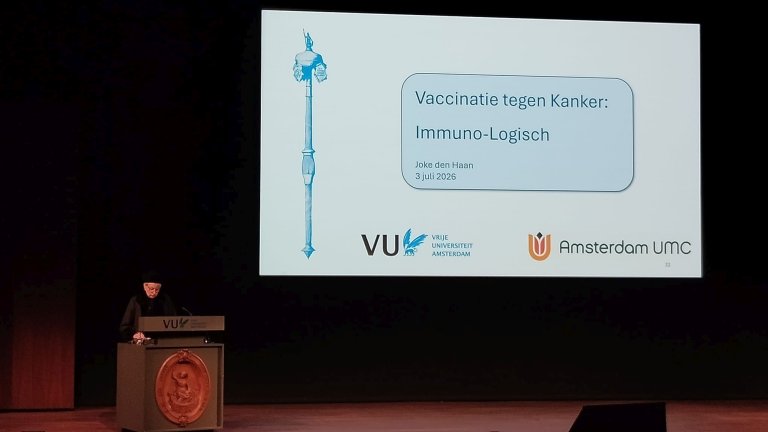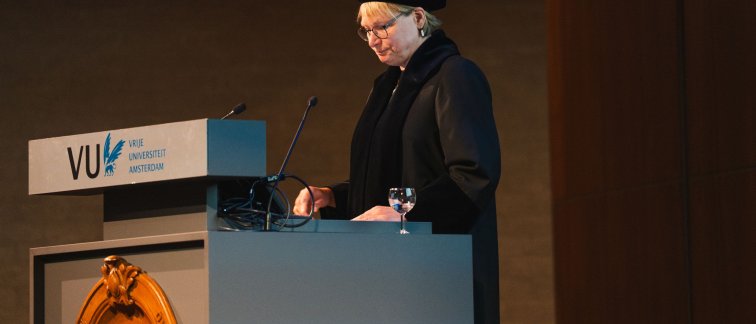
On Friday, 3 July 2026, Prof. Dr. Joke den Haan delivered her inaugural lecture at Vrije Universiteit Amsterdam, marking her appointment as Professor of Translational Immunology, with a particular focus on Cancer Vaccines.
Vaccination as a foundation for modern medicine
In her lecture, Vaccines against Cancer: Immuno-Logical, den Haan reflected on the remarkable success of vaccination in preventing infectious diseases, from smallpox and polio to the current HPV vaccination program, which is already reducing cervical cancer incidence. She emphasized that vaccination remains one of the most effective medical interventions ever developed, while highlighting the importance of addressing vaccine skepticism through scientific evidence and clear communication.
Therapeutic cancer vaccines and neoantigens
A central theme of her research is the development of therapeutic cancer vaccines. While virus-related cancers can often be prevented through conventional vaccination, most cancers are caused by patient-specific DNA mutations that give rise to neoantigens. These mutations can be targeted by vaccines designed to activate cytotoxic T cells to recognize and eliminate cancer cells. However, current personalized cancer vaccines remain complex, expensive, and challenging to translate into broad clinical practice.
Targeting the immune system more effectively
Den Haan presented her research on improving immune responses by targeting antigen-presenting cells. Her team discovered that specialized macrophages in the spleen work together with dendritic cells to stimulate strong T-cell and B-cell responses. Building on these findings, they developed nanobodies that target the CD169 receptor, enabling vaccines to be delivered more efficiently to these immune cells. This work resulted in a patent and the launch of the spin-off company Immunara, which aims to develop affordable, off-the-shelf cancer vaccines based on shared tumor antigens.
Preventing cancer recurrence
She also discussed the importance of administering these vaccines in the adjuvant setting, after surgical removal of the primary tumor, when the immune system is still relatively strong and the risk of recurrence can potentially be reduced. In addition, den Haan highlighted the continued importance of carefully regulated animal research to study complex immune responses, while acknowledging the growing role of alternative models and technological innovations.
The growing role of artificial intelligence
Looking ahead, she expects artificial intelligence to play an increasingly important role in predicting optimal vaccine targets and designing antibodies and nanobodies. She concluded that although AI and advanced technologies will transform immunology research, a thorough understanding of the immune system will remain essential to translate these innovations into effective and affordable cancer treatments.
Bringing cancer vaccines closer to patients
Her lecture highlighted how advances in immunology, biotechnology, and artificial intelligence are bringing therapeutic cancer vaccines closer to clinical practice, offering new opportunities to improve outcomes for patients with cancer.