
Why MS is so difficult to predict
MS presents in different forms and varies widely between individuals. Biological processes, brain structure, immune activity, and lifestyle all interact. At the same time, age plays a major role in MS research: the older a person is, and the longer they have had the disease, the greater the risk of decline. In studies with broad age ranges, these effects often overlap, making subtle differences in disease progression difficult to detect.
The MS Cohort: connecting care and research
The MS Center Amsterdam, established in 1998, conducts research on the diagnosis, course, and treatment of MS. Within the MS Cohort, clinical data, brain imaging, and biological samples are systematically collected and analyzed. By closely integrating care and research, insights from data can be translated into practice more quickly. Within this cohort, Project Y was developed to study disease progression in a more focused way.
Project Y: a birth-year cohort as a research strategy
Project Y (pronounced “why”) is a study of people with MS in the Netherlands who were all born in 1966. Between 2017 and 2020, 452 individuals were identified, of whom 367 participated. In addition, 125 individuals without MS were included as a control group.
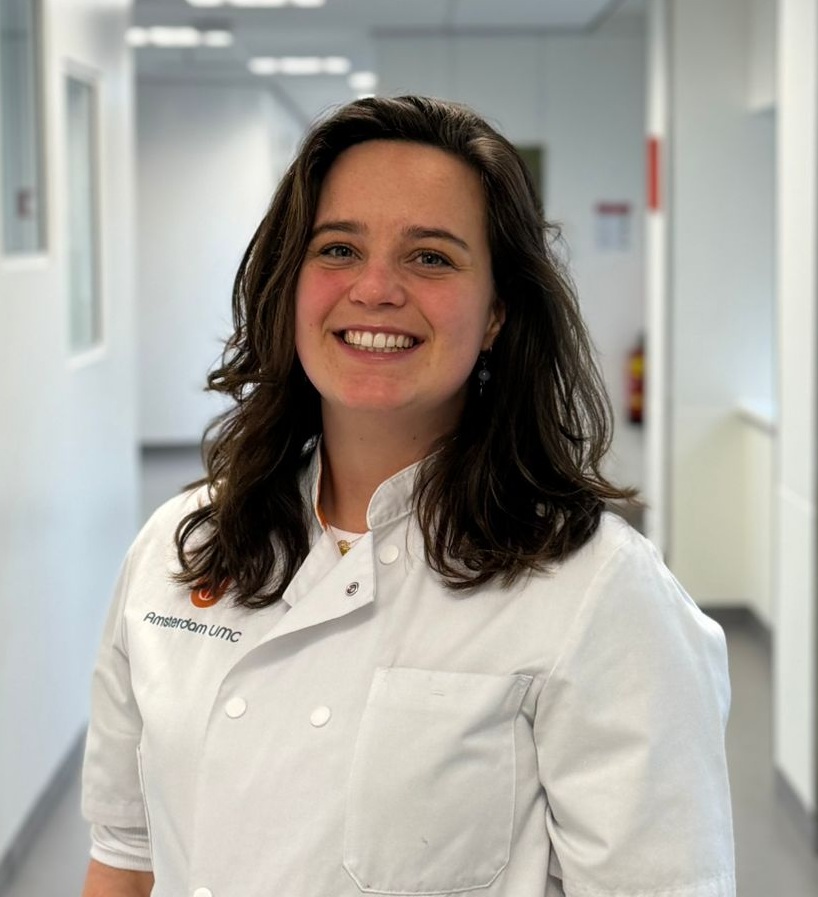
The choice to focus on a single birth year was deliberate. Linde Holwerda, PhD candidate at Amsterdam UMC, explains: “Age is a key factor in MS research. If everyone is the same age, you can truly examine why one person is more affected than another. This allows us to analyze differences in disease progression much more precisely. It also means participants are at a life stage where MS progression becomes clearly visible.”
What makes this cohort unique worldwide
The strength of Project Y lies in its combination of precision and depth. Because all participants were born in the same year, differences in disease progression are not confounded by age or generational effects. At the same time, the cohort is exceptionally comprehensive. Clinical data are linked with MRI imaging, cognitive testing, blood biomarkers, and lifestyle information.
Efforts were also made to include a broad and representative group, including participants with limited mobility by conducting home visits. As Holwerda notes: “If you only include people who can easily come to the research site, you miss an important part of the story.”
New insights from Project Y
The study has improved our understanding of MS in the Netherlands. Among individuals born in 1966, the prevalence was found to be 1.89 per 1,000 people, almost twice as high as previously reported. It is now estimated that over 35,000 people in the Netherlands are living with MS.
At the biological level, the cohort provides important insights. Blood biomarkers associated with nerve cell damage were found to correlate with brain tissue loss on MRI scans, which in turn is linked to physical decline.
Structural brain characteristics also play a role. The amount of gray matter and the volume of the spinal cord are associated with levels of physical disability, making differences in functioning visible in the anatomy of the central nervous system.
The cohort also highlights the role of early-life factors. Overweight in early life is associated with a higher risk of developing MS and an earlier onset of symptoms. Lifestyle and diet are also linked to disease progression and brain tissue loss.
From insight to more targeted care
The next step may be the most important: not only understanding why people differ, but also learning to predict who will experience decline. This is where the second wave of Project Y, starting this month, becomes especially valuable. As Holwerda explains: “Only with repeated measurements can you truly see who is declining and who is not.”
For people living with MS, this represents a significant step forward. By tracking changes over time, researchers can identify which patients are at risk of deterioration and which factors contribute to it. This creates the foundation for predicting disease course and, ultimately, for delivering more targeted and timely treatments.
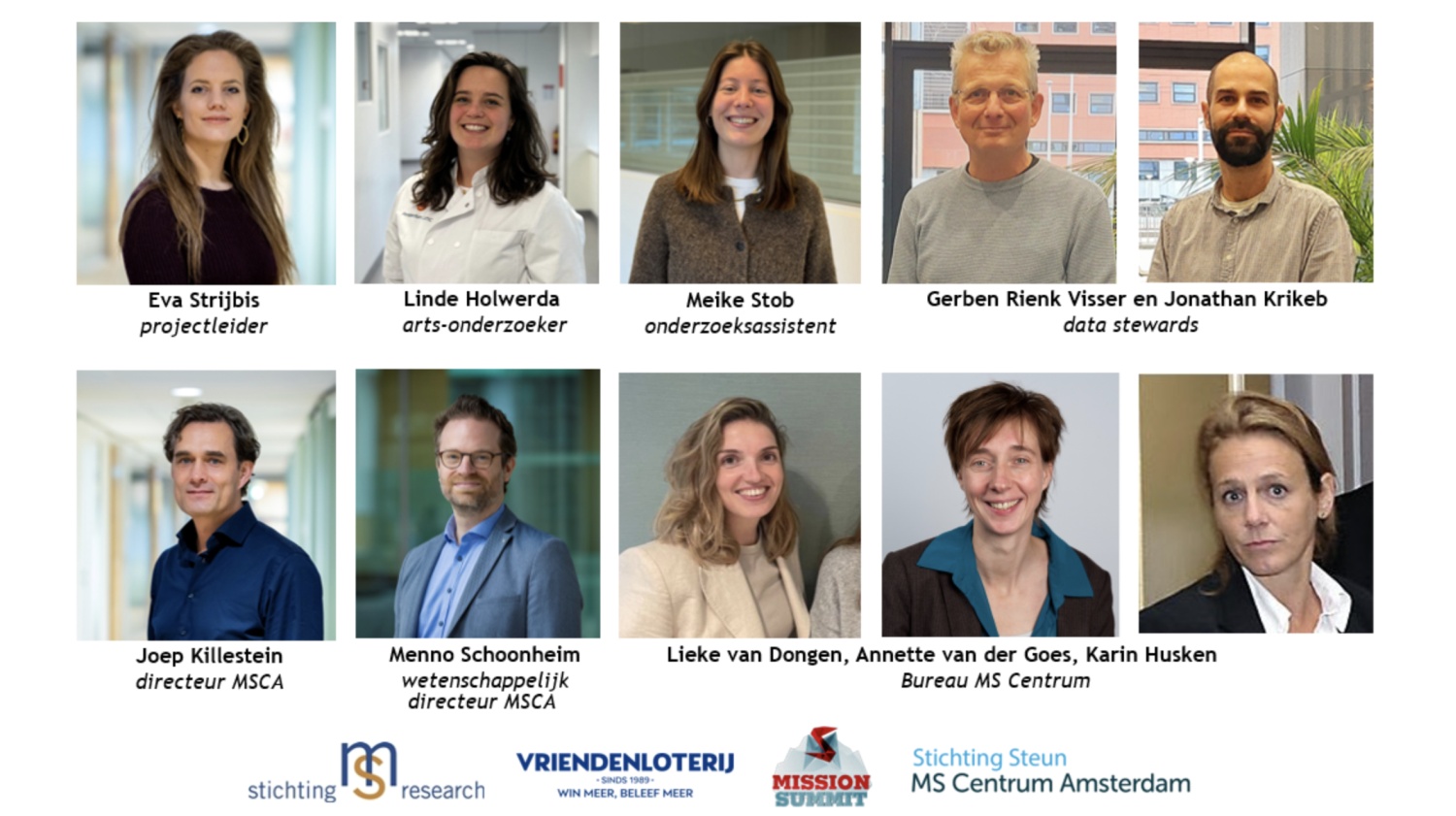
The Project Y research team
Acknowledgment
This research was made possible thanks to the support of donors and contributions from Stichting Steun MS Center Amsterdam, Mission Summit, the VriendenLoterij, and Stichting MS Research.