

Through the sector plans, the Dutch Ministry of Education, Culture and Science invests in this effort. Within the Medical and Health Sciences domain, the Dutch university medical centers (UMCs) work together on Accelerating Health, with a focus on prevention, data-driven innovation, and the translation of fundamental research into clinical care and practice.
A positive interim evaluation of the Accelerating Health sector plan shows that this approach is working. The evaluation highlights national collaboration between UMCs as one of the key outcomes.
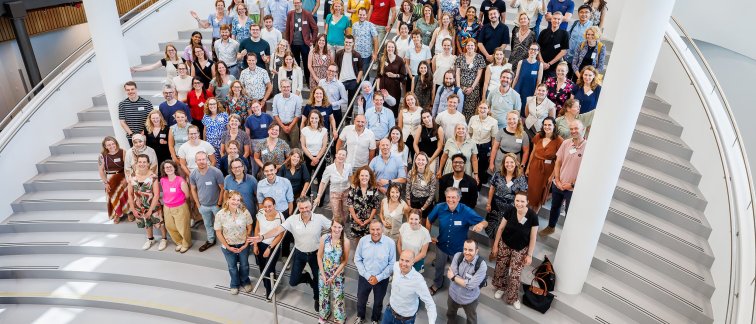
On June 19, researchers, data specialists, and partners from different UMCs and regions came together in Nijmegen for a national Sector Plan Symposium. Amsterdam UMC was strongly represented, with around 40 colleagues joining the meeting. The central question of the day was how data and AI can contribute to earlier detection of health risks, more targeted prevention, and more future-proof health care.

From data to prevention
The program included keynote lectures, short pitches from the Dutch UMCs, poster presentations, and interactive workshops. On behalf of Amsterdam UMC, Betty Tijms, Principal Investigator at Alzheimer Center Amsterdam, presented how the themes of Prevention and Data-Driven Innovation strengthen each other within Amsterdam UMC. She highlighted several initiatives that have been further developed with support from sector plan funding.
One important example is Amsterdam Cohort Hub (ACH). ACH connects 25 long-running cohorts in the Amsterdam region and beyond, together representing data from more than 1.1 million participants. By making research data easier to find, access, and reuse, and by supporting researchers with ICT, legal and ethical questions, and biobanking, ACH contributes to better collaboration and data use across these large studies.
The Amsterdam Prevention Network (APN) was also highlighted. APN is a research network focused on public health, prevention, and reducing health inequalities. Within APN, researchers, societal organizations, and the municipality work together on research that starts from concrete health questions in the city and aims to develop preventive solutions that can be used in policy and practice.
Another Amsterdam UMC initiative supported through sector plan funding is the eHealth Living and Learning Lab Amsterdam (ELLLA). This lab supports the development and evaluation of digital health solutions, such as apps, websites, telehealth, remote patient monitoring, and AI-driven applications. Together with researchers, health care professionals, students, patients, and societal partners, ELLLA explores how these innovations can be used in practice in a way that is useful, effective, and accessible.
Together, these initiatives show how Amsterdam UMC connects data, research, and practice to contribute to better prevention and health care.
Strengthening national connections
The symposium showed what the sector plans are putting in motion: more exchange between UMCs, stronger links between research themes, and a firmer basis for long-term collaboration. Throughout the day, it became clear how much is already happening at the intersection of prevention, data-driven innovation, and AI. It also showed where there are opportunities to better connect knowledge, infrastructure, and initiatives.
In this way, the symposium gave a clear boost to national collaboration, with a shared ambition to further strengthen these connections in the coming years.