


Puberty, pregnancy and menopause are periods of major hormonal change. But do these transitions affect the brain in similar ways? Researchers from the Pregnancy Brain Lab at Amsterdam UMC have now compared brain changes across all three stages for the first time. Their findings reveal both striking similarities and important differences. The study was published today in Nature Communications.
PhD candidate Sophie van ’t Hof and colleagues analysed repeated MRI scans from more than 1,000 women across three groups: girls around puberty, women before and after pregnancy, and women before and after menopause. For each group, the researchers compared brain changes with those seen in women who were not going through the hormonal transition. This allowed them to distinguish changes linked specifically to puberty, pregnancy or menopause from changes that normally occur with age.
Different transitions, different patterns
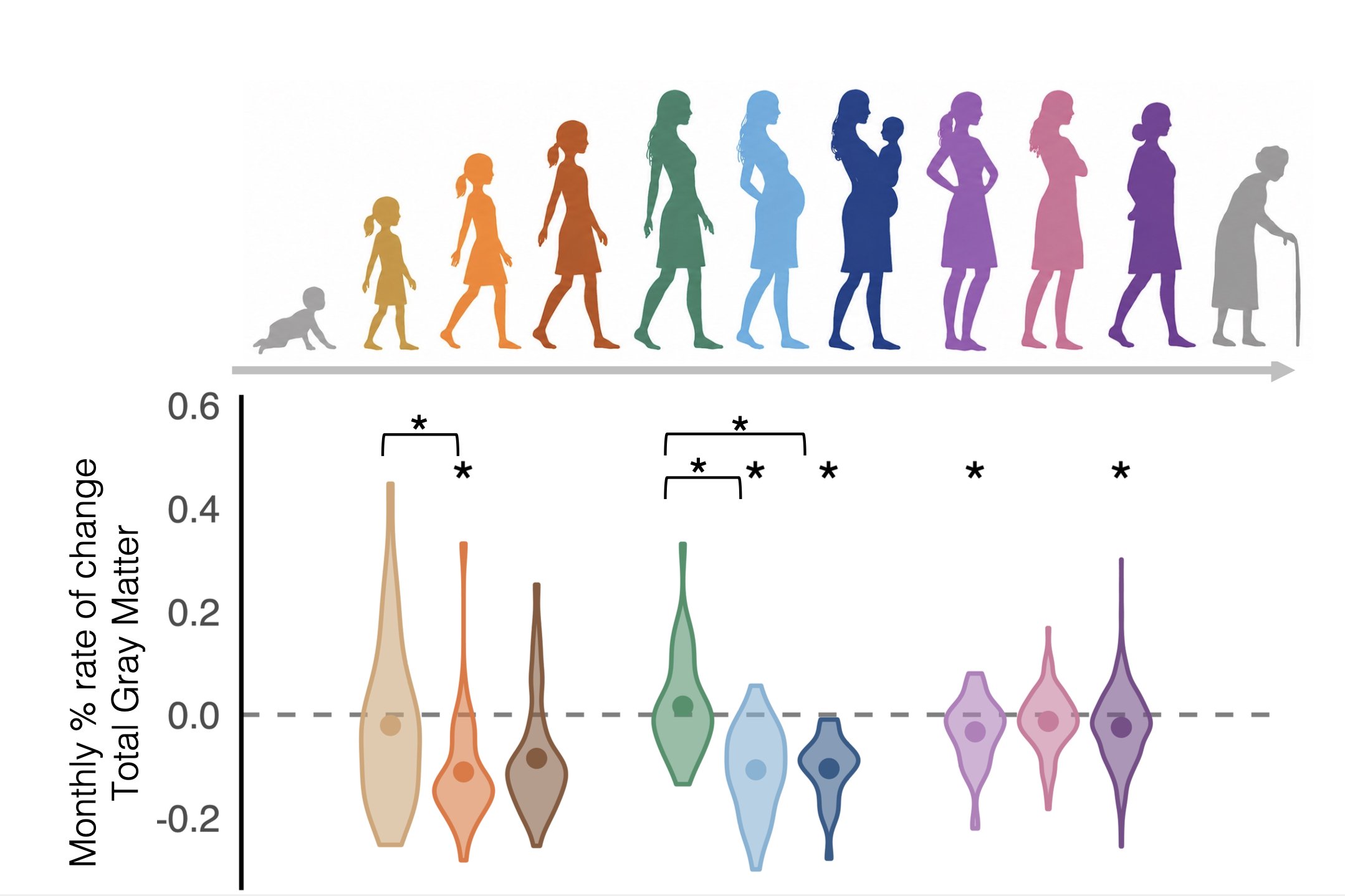
During puberty and pregnancy, the researchers found a substantial decrease in grey matter in the cerebral cortex. The extent of these changes was similar during both life stages, and some of the same brain regions were affected. These regions are involved in complex cognitive functions, such as planning, decision-making and processing information.
However, puberty and pregnancy also showed important differences. In more than half of the brain regions studied, the pattern of change was different between the two transitions.
Menopause showed a very different pattern. Women transitioning from before to after menopause did not show a faster decline in grey matter than women who were already in the pre- or post-menopausal stage. This suggests that, rather than accelerating the age-related decline in grey matter, menopause may temporarily slow it down.
A step towards understanding the female brain
Female-specific changes in the brain have been underrepresented in brain research for a long time. Until now, there had also been no longitudinal study looking at changes across the whole brain during menopause.
By studying puberty, pregnancy and menopause using the same approach, this research provides a new basis for understanding how major hormonal transitions affect the brain. The findings can help guide future research into brain health around these important stages of life.