

The Amsterdam MS Cohort is one of the cohorts connected to Amsterdam Cohort Hub (ACH).
Very little new inflammatory activity detected
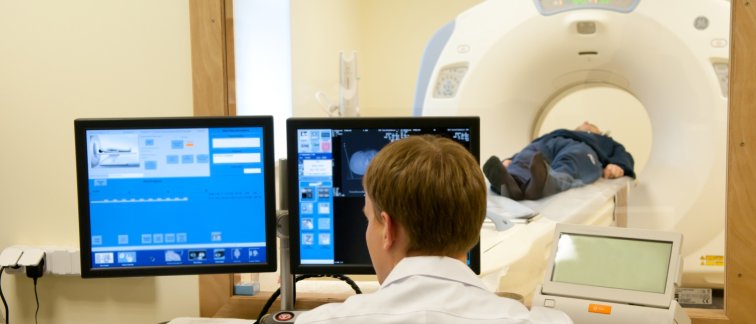
Lisa Schoof and colleagues analysed 1,639 MRI scans from 342 people with MS who were treated with ocrelizumab. All scans were performed as part of routine clinical care. The researchers reviewed radiology reports to determine whether there was evidence of radiological disease activity: new or enlarged MS lesions (T2 lesions) in the brain or active inflammation visible after the administration of a contrast agent.
The results were clear: disease activity was detected in only 1.8% of all MRI scans and in 6.7% of patients. Moreover, none of these findings led to a change in treatment. In other words, although MRI detected new activity in a small number of cases, this did not affect clinical management.
MRI scans may be needed less often
For people with MS who have been stable on ocrelizumab for a longer period of time, the findings are encouraging. They may need MRI scans less frequently, particularly if they have shown no new disease activity for at least two years. This could mean fewer examinations and a lower burden for patients.
Less frequent MRI monitoring does not mean that people with MS will be followed less closely. Symptoms, neurological examinations and regular contact with their neurologist remain just as important. Whether and how often an MRI scan is performed remains a shared decision between patient and neurologist, taking into account the individual course of the disease, as well as personal circumstances and preferences.
Towards more personalised MS monitoring
The researchers also calculated how many MRI scans are needed to detect one case of disease activity, known as the number needed to scan. This measure can help find the right balance between adequate monitoring and avoiding unnecessary examinations. Based on their results, the researchers argue that current guidelines for MRI monitoring in people with MS treated with ocrelizumab should be reconsidered.
The ultimate aim is to move towards a more personalised approach to monitoring treatment. For some people, an annual MRI will remain appropriate, while others may be safely monitored at longer intervals. This could help tailor care more closely to each patient’s disease course and individual situation.
Original publication
Value of Annual MRI Monitoring in Patients With Multiple Sclerosis Treated With Ocrelizumab: A Number Needed to Scan Analysis
Lisa Schoof et al.
Neurology 2026 Aug 25;107(4):e218379
The study is part of the Amsterdam MS Cohort, one of the cohorts connected to Amsterdam Cohort Hub (ACH). The Amsterdam MS Cohort is partly funded by Stichting Steun MS Centrum Amsterdam.
Source: Amsterdam UMC