

We are proud to announce the thesis defense of Rosalie Kempkes next week Wednesday. In her thesis, she sheds new light on the regulatory mechanisms of monocytes and macrophages in atherosclerotic cardiovascular disease. This work paves the way for innovative therapeutic strategies targeting inflammation in heart disease.
Key Findings Unveiled
Kempkes’ research highlights the central role of macrophages in all stages of atherosclerosis. “Understanding how these immune cells behave is crucial for developing new therapies,” says Kempkes. The thesis includes fundamental studies on molecular mechanisms underlying monocyte and macrophage regulation, focusing on epigenetic modifiers, as well as translational studies in collaboration with clinicians, focusing on the genetic risk factor Lp(a) and the intermittent fasting diet.

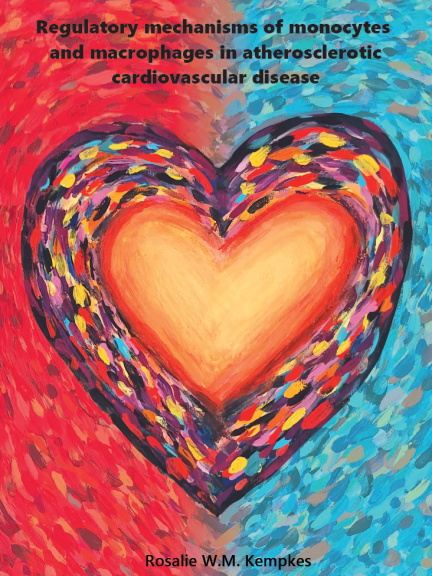
Epigenetic Modifiers Explored
The research focuses on the Polycomb Repressive Complex 2 (PRC2) and its subunits, such as EZH2, EED, and MTF2. ‘Our research showed that PRC2 subunits have context, cell type, and subunit-specific effects’” Dr. Kempkes explains, which insights have been shared in a publication. Pharmacological inhibition of EZH2 was found to suppress pro-inflammatory responses, though with complex effects on lesion composition.
HDAC3 and Plaque Stability
Another key aspect of the study is the role of pharmacological inhibition of HDAC3, an epigenetic enzyme. “HDAC3 inhibitors may offer anti-inflammatory benefits with fewer side effects than general HDAC inhibitors,” notes Kempkes. Previous research showed that genetic depletion of HDAC3 resulted in more stable atherosclerotic plaques, warranting research to pharmacological inhibition of HDAC3 in a similar setting.
Lp(a) and Inflammation
She also investigated Lp(a), a genetic risk factor for cardiovascular disease. “We confirmed that Lp(a) enhances inflammatory responses in monocytes, and showed that subjects with high Lp(a) levels also have higher CXCL10 levels,” says Dr. Kempkes. However, changes in global chromatin accessibility were not observed, indicating other mechanisms may be involved, as can be read in detail here.
Intermittent Fasting Benefits
Rosalie’s thesis also describes a clinical trial of intermittent fasting in subjects at increased cardiovascular risk, comparing the effects of one meal a day versus three meals a day on cardiovascular and metabolic health outcomes. “Our study investigates the potential of this lifestyle intervention on altering markers associated with increased cardiovascular risk,” Kempkes adds.
Looking Ahead
This research underscores the complexity of inflammation regulation in cardiovascular disease and opens new avenues for targeted therapies. As Dr. Kempkes concludes, “By unraveling these mechanisms, we move closer to more effective treatments for cardiovascular disease.”
The public defense of Rosalie Kempkes will take place on 11 March 2026, 16:00h at the Agnietenkapel. For more information, see the UvA website. You can read her full thesis here.