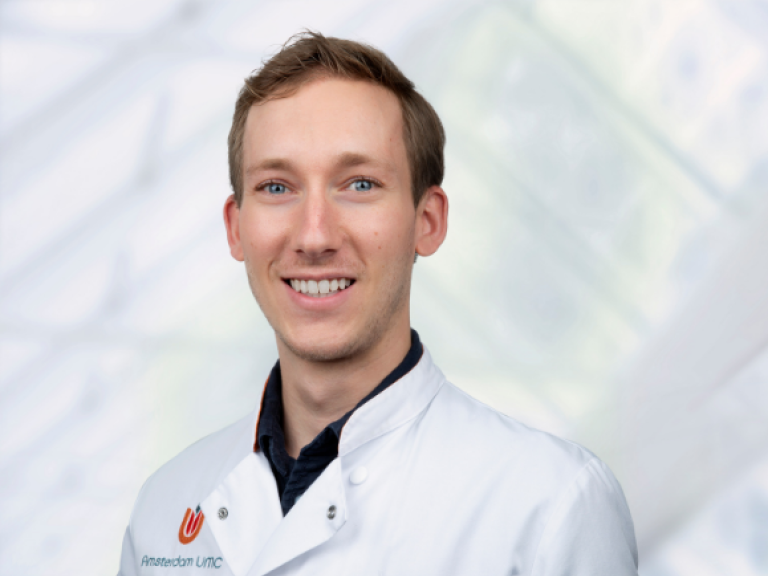
During Postdoc Appreciation Week, we are once again shining a spotlight on the postdoctoral researchers at Amsterdam Cardiovascular Sciences. Postdocs are a vital part of our institute: they contribute to groundbreaking research, mentor young scientists, and bring new perspectives. In this series of short articles, we introduce some of our postdocs to you. We asked them about their research, their motivations, and their experiences as postdocs. Get to know the people behind the science and be inspired by their stories! Today, in the final article of this series, the spotlight is on Luuk Hopman, who was appointed assistant professor at Cardiology this May. He looks back on his postdoc years and shares his experiences with this transition.
What impact do you hope your research will have on the field of cardiovascular science or on society?
I hope my research helps move cardiovascular care towards true precision medicine. Patients with the same diagnosis often respond very differently to treatment because the underlying disease can vary considerably from person to person. By combining advanced cardiac imaging with electrophysiology and other image-guided cardiac interventions, I aim to better understand those differences and use that knowledge to support clinical decision-making.
Ultimately, I want cardiac MRI to become more than a diagnostic tool. I hope it will help physicians select the right treatment for the right patient, guide interventions more precisely, and objectively evaluate treatment success. By using MRI to personalize treatment strategies, we can improve outcomes, reduce unnecessary procedures, and ultimately enhance patients' quality of life.
How do you look back on your postdoc trajectory? What did you enjoy most or find most challenging about working as a postdoc?
Looking back, my postdoc years have been incredibly rewarding, but certainly not without challenges. Like many early-career researchers, I experienced the uncertainty of successive temporary contracts and highly competitive grant applications that require months of work while success is never guaranteed. Even reaching the final stages of a funding call can still leave you empty-handed, which can sometimes be discouraging.
At the same time, this was the period in which I really developed my own scientific identity. I enjoyed the freedom to build my own research program, initiate new collaborations, supervise PhD students, and work closely with clinicians, engineers, and industry partners. Seeing ideas evolve from an initial concept into a study that can ultimately benefit patients is incredibly rewarding. Over time, my role gradually shifted from conducting research myself to leading projects, supervising junior researchers, and building multidisciplinary collaborations, which has been one of the most fulfilling aspects of my academic journey.
How do you experience the transition to assistant professor, and do you have any tips for other early-career researchers?
Although I only recently started as an assistant professor, the transition has felt very natural. Responsibilities in academia usually grow gradually, and becoming an assistant professor therefore feels more like the next step in an ongoing journey than a sudden change.
If I could give one piece of advice, it would be to develop your own niche. Build expertise in an area where you can make a unique contribution, invest in collaborations, and create a strong professional network. Over time, this allows you to establish your own research line and become someone who brings unique knowledge and ideas to a team. I believe that having your own expertise and identity as a researcher is one of the strongest foundations for a sustainable academic career.
At the same time, stay persistent. Research rarely follows a straight path, and setbacks are part of every academic career. Keep refining your ideas, ask for feedback, and continue investing in your own scientific vision. Surround yourself with mentors and colleagues who believe in your potential. Talent is important, but having an environment that encourages and supports your development can make all the difference.
Postdoc appreciation week
This week (21–25 September), the Netherlands is hosting the second edition of Postdoc Appreciation Week NL (PAW_NL).
Events are taking place across the country. This is your opportunity to connect, learn, and celebrate the contributions of postdoctoral researchers at both local and national level.
The program of events at Amsterdam UMC can be found on the Postdoc Network Amsterdam UMC website.