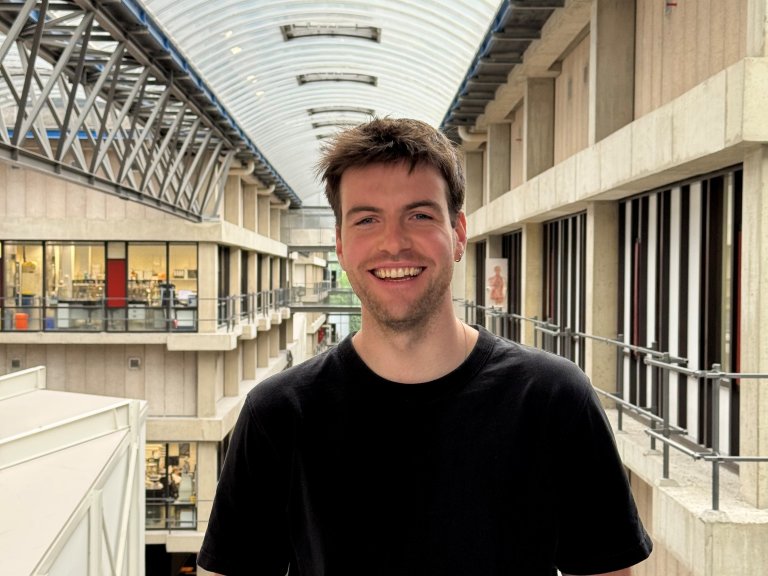
During Postdoc Appreciation Week, we are once again shining a spotlight on the postdoctoral researchers at Amsterdam Cardiovascular Sciences. Postdocs are a vital part of our institute: they contribute to groundbreaking research, mentor young scientists, and bring new perspectives. In this series of short articles, we introduce some of our postdocs to you. We asked them about their research, their motivations, and their experiences as postdocs. Get to know the people behind the science and be inspired by their stories! Today in the spotlight: Tom Collins, postdoctoral researcher at Experimental Vascular Medicine.
What impact do you hope your research will have on the field of cardiovascular science or on society?
I hope my research will provide insight into how glucose metabolism in endothelial cells controls cytokine secretion and how this drives cardiovascular inflammation and atherosclerosis. By mapping these mechanisms, I aim to identify new therapeutic targets for cardiovascular disease that can reduce the production of inflammatory cytokines, which in turn reduces inflammatory immune cell production. This research will also further demonstrate the immunomodulatory capacity of the endothelium and the extent to which it influences immune cell function.
What do you enjoy most or find most challenging about working as a postdoc, and do you have any tips for other early-career researchers?
What I enjoy most about being a postdoc is the opportunity to develop scientific independence while working with colleagues and students on shared projects. I enjoy designing experiments, troubleshooting unexpected results, and seeing a project evolve from idea to publication, which is deeply satisfying. The most challenging part is managing uncertainty about funding, career trajectories, and the pace of scientific progress. My tip for early-career researchers is to build a diverse support network, set realistic short-term goals alongside long-term ambitions, and remember that setbacks are part of the process, not a reflection of your potential.
Postdoc appreciation week
This week (21–25 September), the Netherlands is hosting the second edition of Postdoc Appreciation Week NL (PAW_NL).
Events are taking place across the country. This is your opportunity to connect, learn, and celebrate the contributions of postdoctoral researchers at both local and national level.
The program of events at Amsterdam UMC can be found on the Postdoc Network Amsterdam UMC website.