

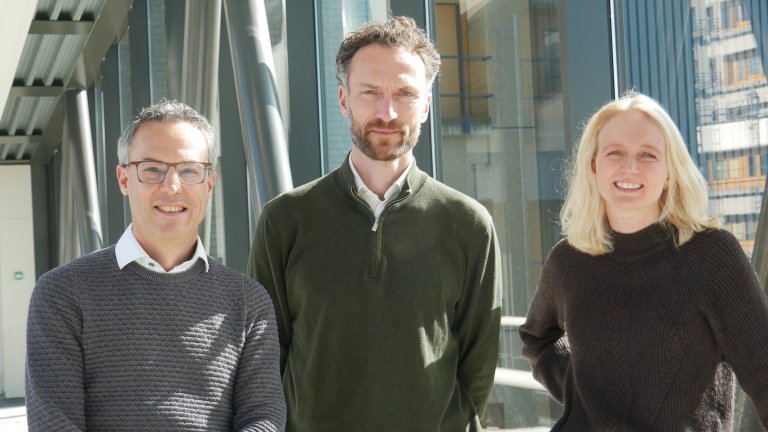
ZonMw has awarded a ZonMw Open Competition Grant of EUR 918.491 to internist dr. Onno Holleboom for his collaboration with immunologist dr. Bruno Guigas and glycobiologist dr. Noortje Haan from LUMC. The GLYCELL project investigates how specific sugar molecules (glycans) influence communication between liver cells and contribute to the development and progression of steatotic liver disease (MASLD), aiming to provide new insights and targeted therapies.
Understanding Disease Progression
Steatotic liver disease begins with fat accumulation in the liver and can progress to more severe stages involving inflammation, fibrosis, cirrhosis and cancer. The scientists hypothesize that changes in how liver cells communicate play a key role in this progression.
Focus on Glycans
The GLYCELL project will focus on glycans, which are complex sugar molecules found on all human cells. These molecules are known to influence cell communication, but their role in liver disease and MASLD in particular remain to be deciphered.
Innovative Research Methods
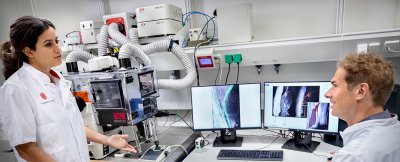
Holleboom and his colleagues will use advanced mass spectrometry techniques to map glycans in liver samples from patients of Holleboom’s prospective Amsterdam MASLD-MASH cohort and the sister cohort CoCoMASLD from prof. Lise Lotte Gluud at Copenhagen University where Holleboom is visiting associate professor. This approach will help identify which glycans are involved in disease development.
Testing in Model Systems
The team will also modify glycans in sophisticated human model systems to study their function in the disease process. This will provide valuable insights into how these sugar structures affect liver health.
Innovative understanding of MASLD
“By uncovering deep mechanisms behind steatotic liver disease, the GLYCELL project can provide innovative insights into this ever more prevalent and severe metabolic liver disease and may even point to new, targeted therapies,” says Holleboom.
The ZonMw Open Competition programme aims to provide space for curiosity-driven and creative collaboration among researchers, leading to groundbreaking science. The programme specifically targets researchers from two or more disciplines who synergistically promote excellent team science. For more information on the awarded project, see the ZonMw website.