General
Each year, the AGEM research institute organizes a seminar series focused on metabolism: the Tager Lectures. These lectures are named after Professor Joseph Tager, who made important contributions to Fabry, Pompe and Gaucher disease and had a major impact on our understanding of peroxisomal diseases. He was chairman of the Biochemistry Department at the University of Amsterdam (1980-1991)
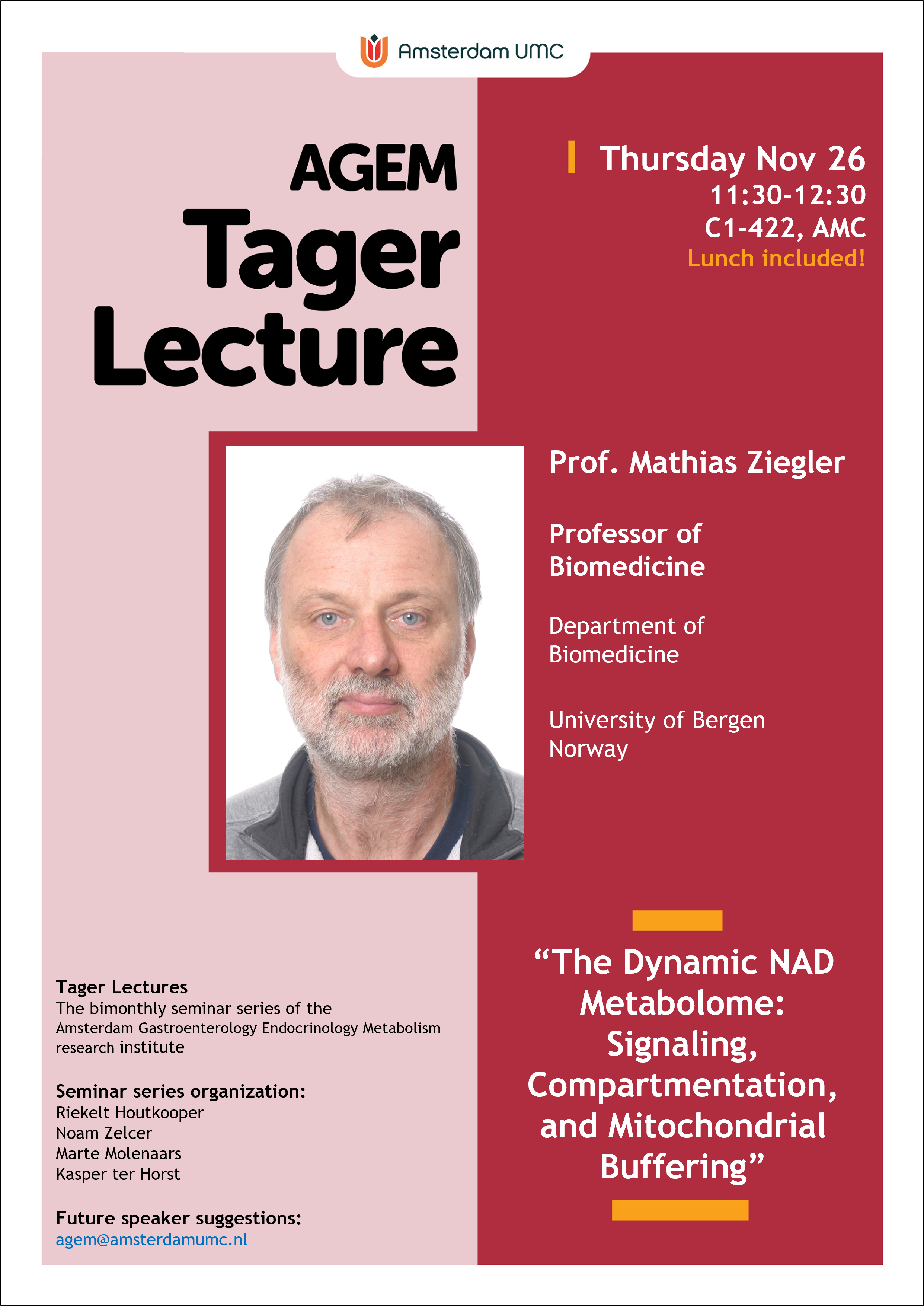
On Thursday November 26th, the Tager seminar series will continue with a new lecture by Mathias Ziegler, who is a professor at the Department of Biomedicine at the University of Bergen and a leading researcher in cellular metabolism.
His work explores the compartmentalization of NAD+ pools and their interactions with mitochondria, shedding light on fundamental mechanisms of cellular aging and age-related disease. By bridging basic metabolic biology with therapeutic applications, Ziegler has significantly shaped the field, notably serving as a three-time organizer and 2024 keynote speaker for the FASEB Conference on NAD Metabolism and Signaling.
The Dynamic NAD Metabolome: Signaling, Compartmentation, and Mitochondrial Buffering
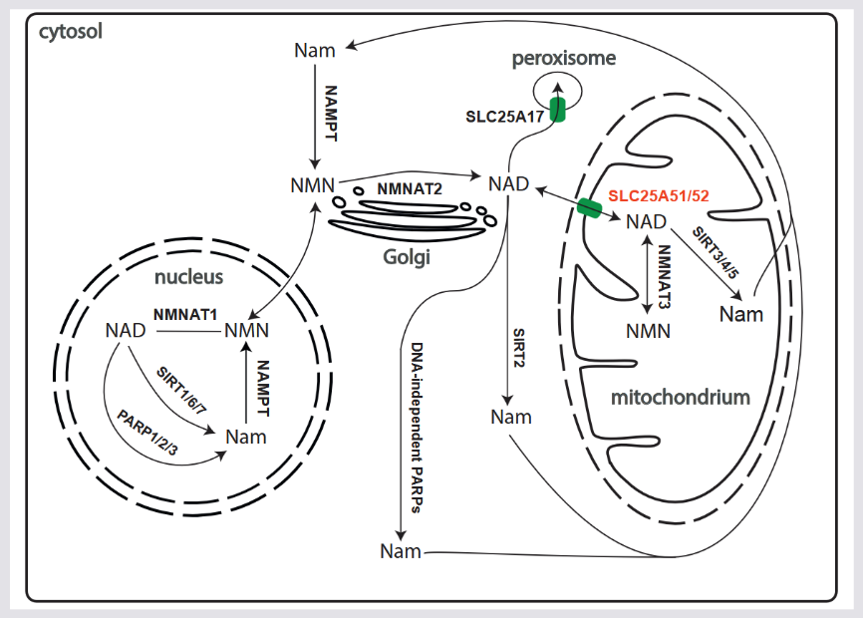
Nicotinamide adenine dinucleotide (NAD) is a central metabolic hub essential not only for classical redox biochemistry but also for driving critical cellular signaling pathways. By acting as a mandatory substrate for signaling enzymes like sirtuins and PARPs, NAD regulates core cellular functions including DNA repair, epigenetic modulation of gene expression, and stress responses. Because these signaling activities continuously consume NAD, robust biosynthesis is crucial to preserve overall metabolic homeostasis.
A major challenge in the field has been determining how localized, organelle-specific NAD fluctuations drive cellular aging and metabolic disease. Addressing this, recent discoveries have illuminated the intricate subcellular compartmentation of the NAD metabolome. Notably, mitochondria have been identified as a critical dynamic reservoir. By buffering NAD levels, mitochondria safeguard energy homeostasis during metabolic stress. Uncovering how these distinct pools communicate across organelle borders is now paving the way for selectively targeting compartmentalized NAD for therapeutic intervention.