

Sepsis explained (2/3): Treating sepsis
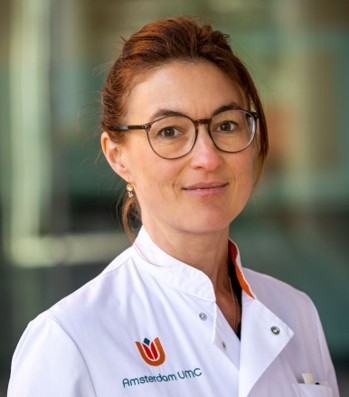
Sepsis is a medical emergency, but once the acute crisis is over, the question changes: how much treatment does this patient still need? On Monday, PhD candidates Aryna Kolodyazhna, Floris de Vries, and Susanne Doeleman, explained what sepsis is and why it can turn deadly within hours. Today, in the second article of our series ahead of World Sepsis Day on 13 September, Dr. Kim Sigaloff, internist specializing in infectious diseases and associate professor at Amsterdam UMC and the Amsterdam institute for Immunology and Infectious Diseases, outlines why the smartest course of antibiotics may be the shortest one that is still safe.
What are the main research gaps in current sepsis treatment that you would like to see addressed?
First, antibiotic duration is often based on historical convention, a fixed number of days or weeks, rather than on how an individual patient is actually responding. Even when evidence supports a shorter course, clinicians tend to choose for longer treatment, ‘just to be safe’.
Second, diagnostic uncertainty drives overtreatment. It can take 24 to 48 hours to identify the causative organism, and during that time patients receive unnecessarily broad-spectrum antibiotics, a major driver of antimicrobial resistance, in which bacteria become insensitive to antibiotics.
Third, sepsis is not one disease, and early risk stratification is therefore essential. This is illustrated, for instance, by the heterogeneity of Staphylococcus aureus bacteremia. The presence of S. aureus bacteria in the bloodstream can range from a simple catheter infection to endocarditis (infection of the heart valves) or deep-seated abscesses. Yet initial treatment is often standardized rather than risk-stratified.
What should patients and families know about sepsis treatment?
That speed matters in the beginning, but restraint matters afterwards. If someone suddenly becomes confused or starts breathing rapidly due to an infection, seek medical help immediately. Once the acute phase is over, doctors can decide to shorten or stop treatment with antibiotics. Stopping at the right moment protects the patient from side effects and helps keep antibiotics effective for everyone.
Which part of sepsis treatment is central in your research, and what new approaches are you exploring?
My research centers on the treatment phase after the acute crisis is over, with one guiding principle: keep antibiotic treatment as short and as targeted as possible. Through the SAFE trial (safe-trial.nl), we are investigating whether treatment can safely be shortened from the current standard of six weeks to four weeks in patients with complicated S. aureus bacteremia. The goal is an individualized, risk-based duration of therapy: using the patient's clinical recovery, imaging, such as echocardiography (ultrasound of the heart) and PET-CT, a scan that can reveal hidden sources of infection, and follow-up blood cultures to decide when it is safe to stop, rather than applying a one-size-fits-all timeline. This work is embedded in the broader Dutch antimicrobial stewardship framework, the careful use of antibiotics to keep them effective. These efforts are coordinated by SWAB, the Dutch Working Party on Antibiotic Policy, which translates trial evidence directly into national guidelines.
How do you envision sepsis treatment evolving over the next ten years?
In three directions. 1) Shorter and smarter antibiotic courses: unnecessary antibiotics, and other antimicrobials, such as antivirals, can be avoided by implementing individualized stopping rules. 2) Faster and more precise diagnostics, allowing earlier targeted therapy and avoiding unnecessary blood cultures, the topic of Thursday's article in this series. 3) Stewardship built into sepsis care from the start, with more attention to what I would call ‘green sepsis research’ sustainability in healthcare starts with refusing what is unnecessary, so avoiding excess diagnostics and treatment also contributes to more sustainable care.
What are you most proud of, and what do you hope to achieve?
This is the second article in a series of three. On Monday 7 September we explained what sepsis is, on Thursday 10 September we look at innovative diagnostics for sepsis, in the run-up to World Sepsis Day on Sunday 13 September.
Text: Kim Sigaloff and Esmée Vesseur