
In our series of 'Meet the AMS scientist', we shine the light on outstanding AMS researchers and dive into their background, what drives them, what their work brings them and what they bring to their work. These interviews are also shared on the AMS LinkedIn account, feel free to share within your network!
For Arianne, research is about much more than data and statistics. At its core, it is about helping people continue doing the things that matter to them. Whether through exercise, rehabilitation, or lifestyle interventions, her work focuses on one central question: how can people with neurological disorders maintain quality of life for as long as possible?
Arianne’s research mainly centers around multiple sclerosis (MS), with part of her work also focusing on Parkinson’s disease. What makes her work unique is its breadth. Some projects are highly clinical and patient-centered, while others dive deeper into data driven and biological mechanisms such as neurodegeneration, biomarkers, and biological aging. Across all of these projects, however, one theme remains constant: the role of exercise, rehabilitation, and healthy lifestyle in neurological health.
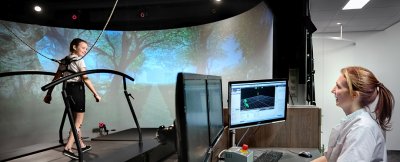
During her PhD, Arianne investigated how physical fitness and exercise influence disease progression in people with MS. Using MRI scans and blood biomarkers, she studied whether staying physically active could potentially slow down neurodegeneration itself. At the same time, she is involved in highly practical rehabilitation research. One of her current projects focuses on improving walking ability in people with MS.
This close collaboration with patients is something Arianne values deeply. It reflects her broader philosophy that research should not only generate knowledge, but also remain practical, motivating, and applicable in real life. A training program may look perfect on paper, but if patients do not enjoy it or cannot realistically maintain it, its impact will remain limited.
That practical perspective also shapes her view on healthy lifestyle interventions more generally. While exercise and healthy living are increasingly recognized as important in neurological diseases, Arianne believes there is still much to learn about why these interventions work. What biological pathways are influenced by exercise? Why do certain interventions work well for one patient but not another? And how do factors such as sleep, stress, nutrition, and biological aging interact with disease progression?
Understanding those mechanisms is something she hopes to explore further in the future. By identifying the underlying biological pathways involved, interventions could eventually become more targeted and personalized.
Arianne did not originally envision herself becoming a researcher. Early on, she knew she wanted to become a physiotherapist and completed a degree in physiotherapy before working in clinical practice. However, she quickly discovered that the fast pace and standardized treatment routines left little room for deeper exploration or individualized care. Wanting more depth, she pursued a master’s degree in Human Movement Sciences at the VU Amsterdam.
It was during an internship that she discovered how much she enjoyed combining patient contact, scientific measurements, and data analysis. Research offered exactly the balance she had been missing: direct interaction with patients while also creating space to ask deeper questions and investigate underlying mechanisms.
Her connection to neurological diseases is also partly personal. Arianne’s father has Parkinson’s disease, which has given her firsthand insight into how complex and impactful these conditions can be. While she emphasizes that MS and Parkinson’s disease are very different disorders, this personal experience has strengthened her sense of empathy and understanding toward patients.
Looking ahead, Arianne hopes to continue expanding interventions while also deepening the understanding of the biological mechanisms behind these exercise and lifestyle interventions. For her, the future of rehabilitation lies not only in proving that movement helps, but in understanding how and for whom it works best.
In diseases where cure or prevention is not yet within reach, progress is often measured differently. For patients living with MS or Parkinson’s, even small gains in movement, independence, or daily functioning can mean everything. Helping create those gains is what continues to motivate Arianne’s research.
Find the article also on our LinkedIn.
Written by Elianne Prange (Communication Officer AMS)