
Human cognition
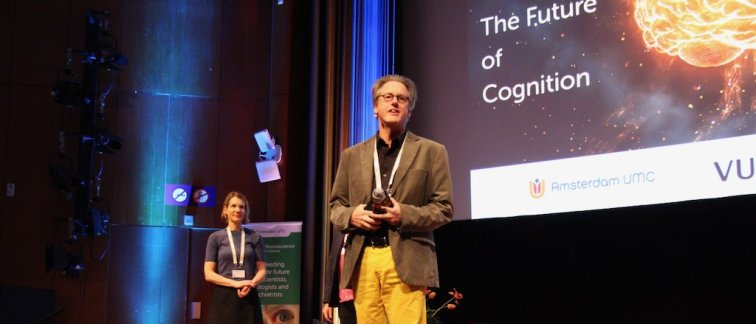
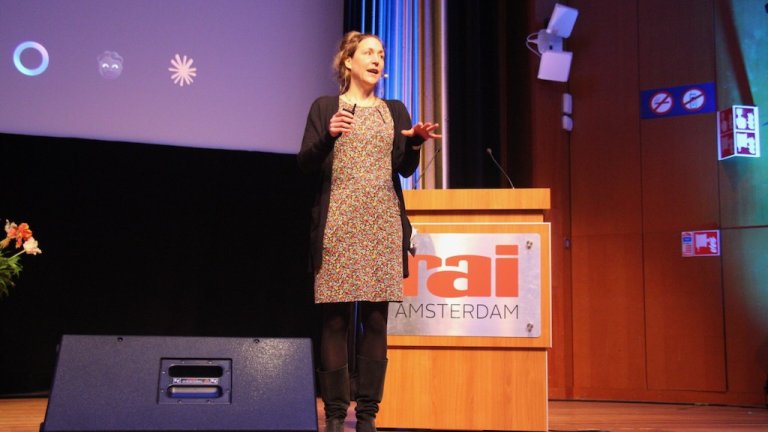
Following the opening, Associate Professor Natalia Goriounova chaired the first session, “What is human cognition?” PhD Candidate Angelica Vanini presented her work on human evolutionary genetics, showing that human-specific segmental duplications contribute to extended prefrontal cortex development. These changes support higher cognitive abilities but also increase vulnerability to mental illness and neurodegenerative disorders. Natalia Goriounova then presented data demonstrating how specific properties of human neurons, such as dendritic complexity and neuronal size, enhance the brain’s computational power and contribute to intelligence. Associate Professor Linda Douw continued this session in which she highlighted the importance of studying brain networks to better understand neurological and psychiatric diseases, which are rarely linked to a single brain region or isolated deficit. Network-based approaches enable in silico predictive models that can ultimately improve treatment effectiveness. The session concluded with Assistant Professor Claire Stevenson, who explored parallels between cognitive development in children and learning processes in large language models, demonstrating that skipping developmental stages leads to poorer reasoning performance in AI.
Young Amsterdam Neuroscience
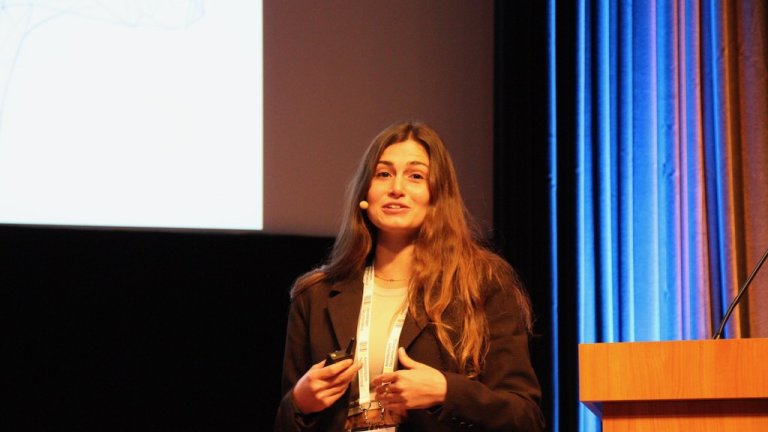
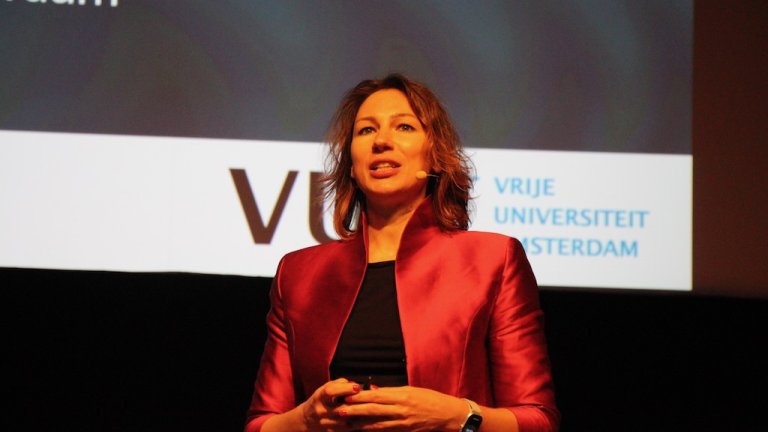
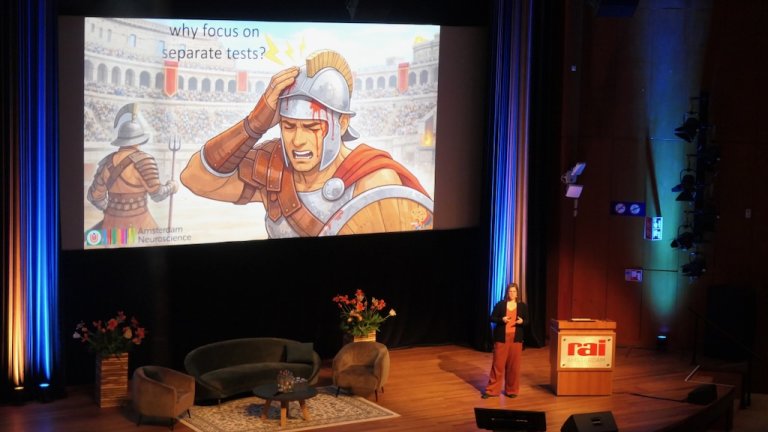
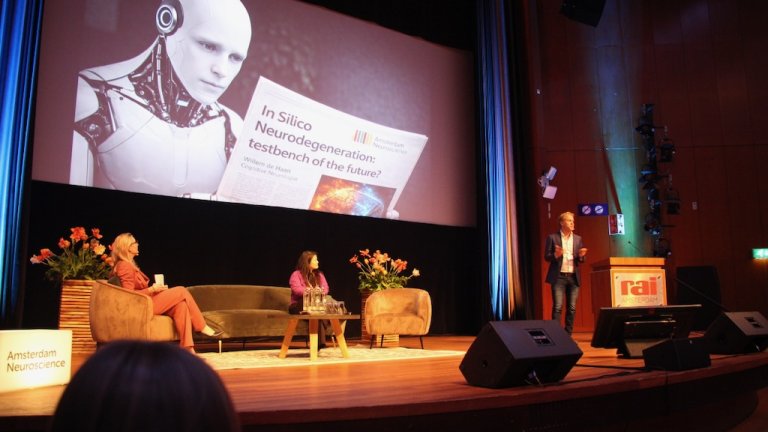
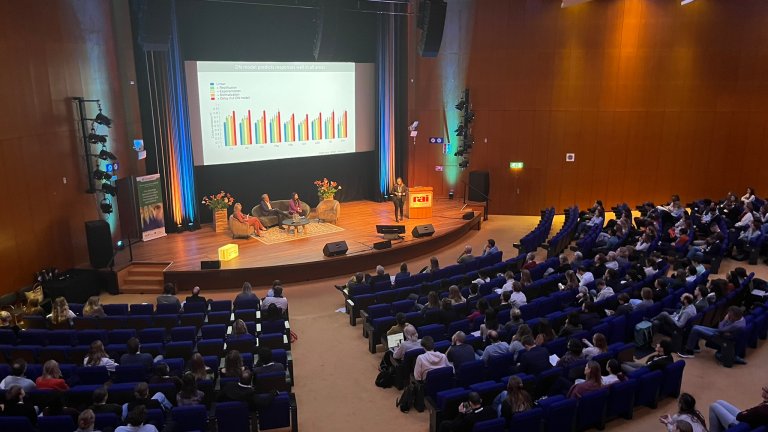
After a coffee break, Young Amsterdam Neuroscience (YAN) hosted a session showcasing inspiring work by early- and mid-career researchers. Assistant Professor Laura Han discussed her research on biological brain aging and how lifestyle factors, mental illness, and treatment influence this process. Cognitive neurologist Willem de Haan followed with a talk on how computational modeling can improve understanding of brain disorders and support personalized treatment strategies. The session concluded with Assistant Professor Iris Groen, who presented a model capturing neuronal dynamics in the visual cortex, showing that visual processing is non-linear and involves an expanding processing window along the cortical hierarchy.
Graduate school and valorisation
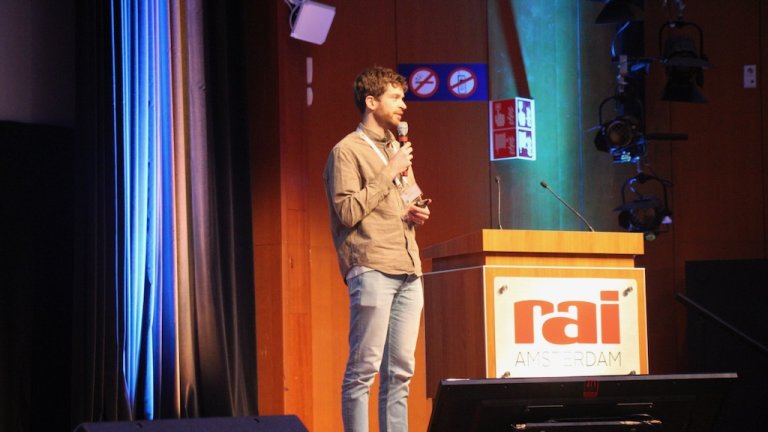
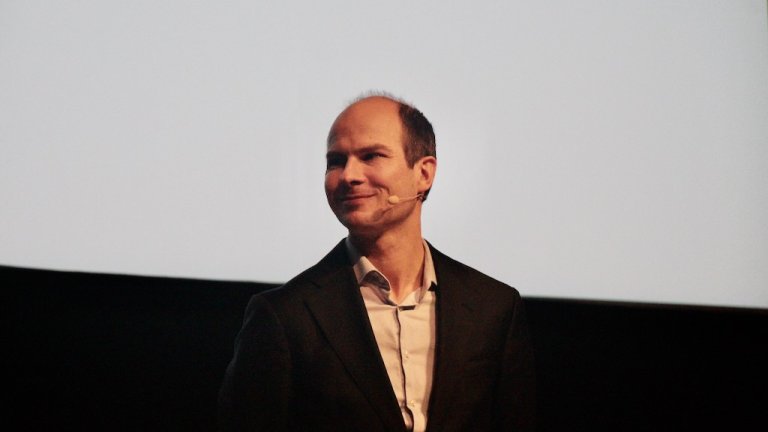
PhD candidate Pelle Wilbers briefly introduced the opportunities offered by the ONWAR Graduate School for PhD candidates. The morning program concluded with an inspirational talk by co-founder and CEO Wouter Potters, who shared his entrepreneurial journey of translating the idea for an EEG-based cap into a spin-off company and a product designed for pre-hospital ambulance triage in stroke patients: the StrokePointer.
Poster market
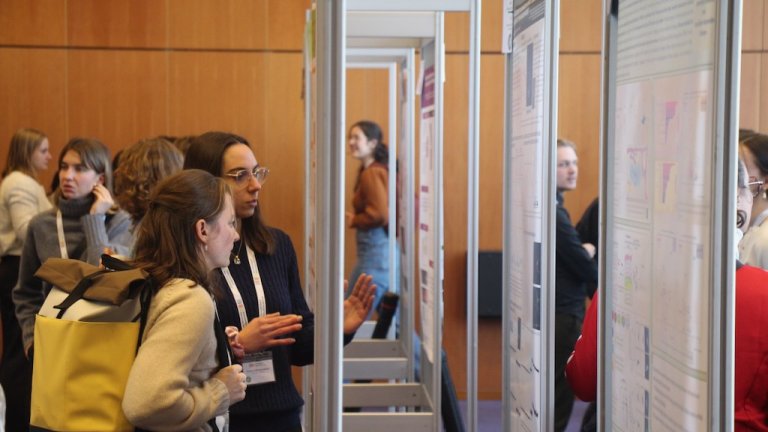
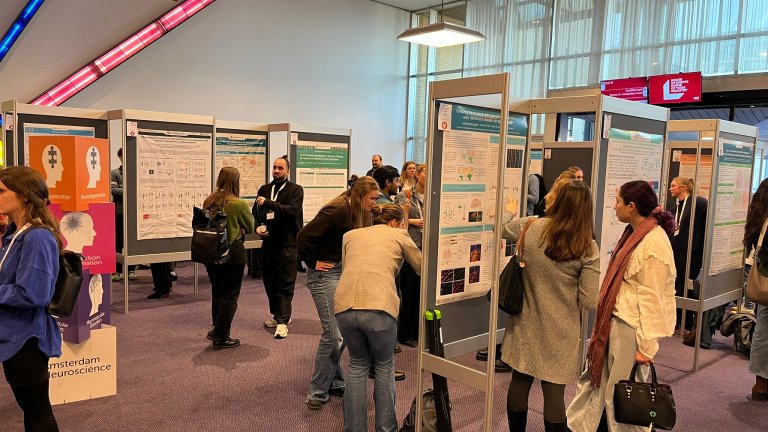
Lunch was accompanied by a lively poster market featuring 120 scientific posters. This session celebrated the broad range of research topics within Amsterdam Neuroscience and promoted accessible knowledge exchange across research domains.
Non-invasive brain stimulation in psychiatry and neurology
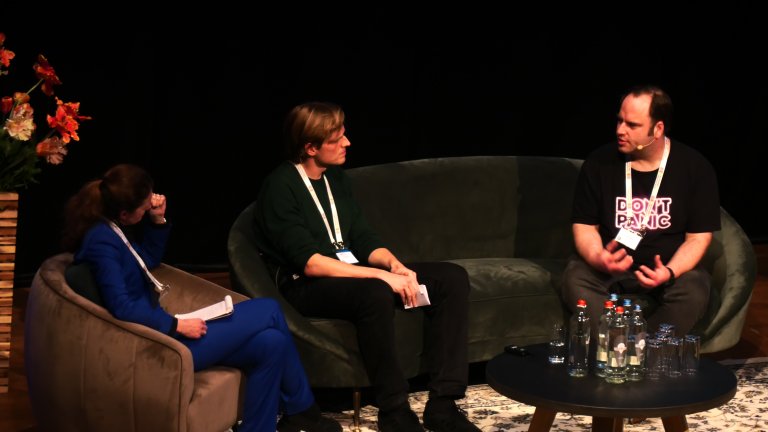
The afternoon program featured a roadshow by Professor of Neuropsychiatry Odile van den Heuvel and members of her team, who presented recent advances in non-invasive brain stimulation in psychiatry and neurology. One technique aimed at boosting brain plasticity involves the use of repetitive transcranial magnetic stimulation (rTMS) in combination with exposure therapy. TMS induces an electric current in the brain through a magnetic field, thereby stimulating brain circuits involved in emotion and behavior regulation. By doing so, the brain is brought into an optimal state to enhance the effects of cognitive behavioral therapy. Two impactful personal stories were shared on stage, including an interview with Tim, who participated in the TETRO trial. He offered insights into living with obsessive-compulsive disorder (OCD) and reflected on how participation in the trial helped reduce disease burden. Tim also shared his mission to raise awareness among the general public, stating: “It feels like a lonely disorder, since people don’t know what is going on in your brain.” Van den Heuvel emphasized the importance of personalized brain treatments and outlined future directions for research into brain network dysfunctions.
Poster awards
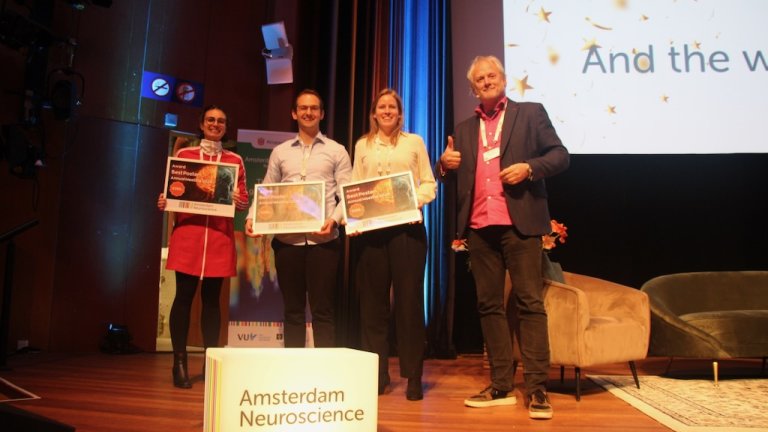
The meeting concluded with nine outstanding poster pitches representing each research pillar of Amsterdam Neuroscience. Eventually, the best poster prizes were awarded to Florence Wavreil (Neurodegeneration - Targeting mutant huntingtin for degradation with intracellular antibodies), Kevin Mol (Neurovascular Disorders - Microemboli clearance by cerebral microvascular plasticity and angiophagy), and Juliette Chevalier (Cellular and Molecular Mechanisms - Peroxisomes: the forgotten organelle).
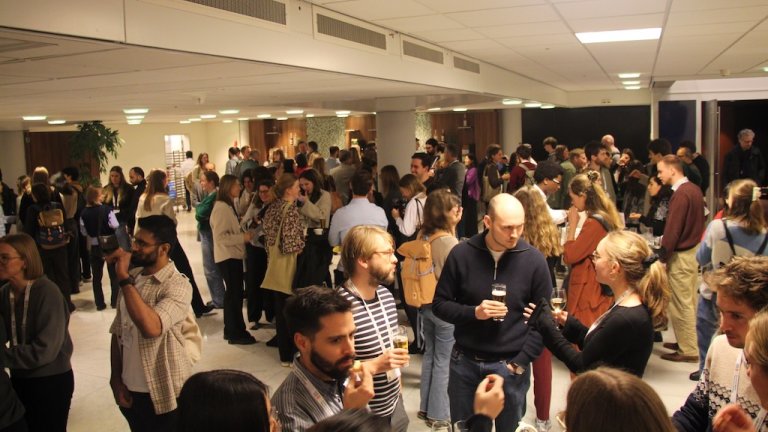
After closing remarks from the directors, the formal program of the Annual Meeting came to an end and the networking began. We are proud to have delivered another successful meeting and look forward to welcoming you again at the next Amsterdam Neuroscience Annual Meeting.
Impression of the day
Pictures by Rien Dekker