

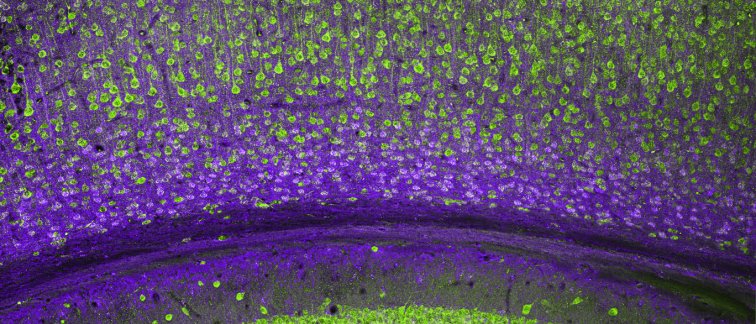
A small population of hippocampal neurons, known as engram cells, is activated during learning and is responsible for memory formation. While it is known that enhanced synaptic connectivity onto these cells supports memory storage and recall, the molecular composition of these specific synapses has remained largely unexplored due to their sparse distribution.
In this collaborative study, researchers including Biswajit Moharana and Priyanka Rao-Ruiz, together with colleagues from MCN, Complex Trait Genetics (CTG), and the Microscopy and Cytometry Core Facility (MCCF) at Amsterdam UMC, generated a comprehensive proteomic dataset of hippocampal engram-cell synapses 72 hours after learning. Their findings shed new light on how aversive and neutral contextual memories are uniquely represented at the synaptic level during memory maintenance.
By combining in vivo circuit-specific labeling of engram cell synapses, sorting to enrich this synaptic sub-population, and highly sensitive mass spectrometry, the authors identified how these synapses adapt their protein composition in parallel with the strengthening of structural and physiological connectivity. In addition, they identified distinct protein expression signatures that dominate when contextual memories are more salient through negative valence, suggesting molecular features associated with memory strength and emotional modulation. Notably, this differential engram cell synapse proteome also showed an enrichment for genes linked to human cognitive phenotypes and related disorders.
By capturing these protein-level shifts, this dataset provides a crucial, hypothesis-generating resource for the research community. It opens up new avenues to investigate the molecular basis of memory, offering a clearer picture of how distinct experiences alter the synapses that encode them.
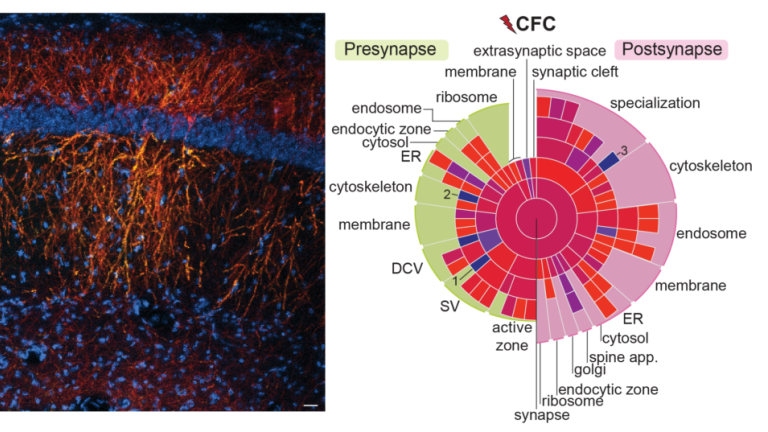
Image: Left: labelled hippocampal memory engram cells (red) and their synapses (yellow). Right: Sunburst plot detailing the localization of engram cell synaptic proteins by sub-compartment.
Read the publication in ScienceAdvances: GRASPing experience-dependent protein expression signatures enriched for hippocampal engram cell synapses
Source: Center for Neurogenomics and Cognitive Research
Top image: Adobestock