

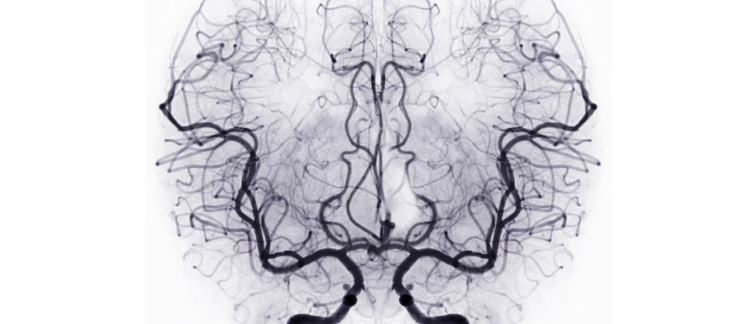
Delayed ischemia after brain hemorrhage
Aneurysmal subarachnoid hemorrhage (aSAH) is a disastrous type of brain hemorrhage associated with high morbidity and mortality. Given the relatively young age of affected patients (with an incidence peak between 50 and 60 years), this condition leads to a substantial loss of productive life years and is associated with the highest average healthcare costs among all stroke subtypes.
A major and feared complication in patients with aSAH is delayed cerebral ischemia (DCI). DCI occurs in approximately 25% of patients and is the leading contributor to poor outcomes after aSAH. However, predicting which patients will develop DCI remains highly challenging. Currently, no clinically available early predictors exist for DCI development. As a result, all aSAH patients are admitted to the hospital for at least two weeks to monitor who will develop DCI. Consequently, approximately 75% of patients who will not develop DCI are also hospitalized for 14 days to monitor their clinical course.
Early prediction of DCI to reduce hospital stays
Professor Verbaan and her colleagues aim to address this issue by analyzing biomarker profiles in blood samples from patients with aSAH to improve early prediction of DCI. Earlier identification of patients at low risk of DCI could shorten hospital stays and enable earlier initiation of rehabilitation, potentially improving clinical outcomes and quality of life. In addition, reducing hospital admission by even one week could lower healthcare costs by an estimated €5,000 per patient.

Blood-based biomarkers in the LIQUID-DCI project
Verbaan and her team propose that blood-based biomarkers may provide a solution. Due to the complicated pathophysiology of DCI, it is expected that reliable prediction of DCI should include not only clinical and radiological variables, but also biological molecular biomarkers. Sophisticated bioinformatics algorithms will be employed to select the most promising and robust markers for test validation. The researchers hypothesize that a selection of a biomarker panel from multiple complementary blood-based biomolecules, including blood plasma proteins, blood platelet RNAs, and the dynamic blood coagulation ROTEM-analyses, which are related to the main underlying pathophysiological processes of DCI, can result in 1) earlier identification of aSAH patients who will not develop DCI, and 2) new insights into its pathophysiology and thereby potential novel treatment targets.
Titel
The ZonMw Open Competition program aims to provide space for curiosity-driven and creative collaboration among researchers, leading to groundbreaking science. The program specifically targets researchers from two or more disciplines who synergistically promote excellent team science. Applications are assessed and ranked based on the criteria of relevance and quality. Knowledge utilization and participation are also key evaluation points. All awarded applications include a solid plan for knowledge utilization and participation, aligned with the research objectives.
Other neuroscience projects
Other promising neuroscience projects that have received funding through ZonMw’s Open Competition and in which researchers from Amsterdam Neuroscience are participating include:
The transgenerational impact of Socio Economic Status on Mental Health; Inheritance revisited - Dr M.P.M. Boks Amsterdam UMC, Dr C.A. Cecil Erasmus Medisch Centrum, Prof. J.O. Mierau University of Groningen, Prof. B.W.J.H. Penninx Amsterdam UMC, Prof. K.J.H. Verweij Amsterdam UMC
Mental disorders are often considered hereditary, yet genes are only part of the story. Socioeconomic circumstances such as poverty and work also play a major role. Their impact can carry over from parent to child, creating the appearance of inheritance and sustaining inequalities in health. This project investigates three pathways. First, dynastic effects: parental problems, including mental disorders, may cause financial insecurity or stress at home, raising children’s risk. Second, gene–environment correlations: genetic vulnerabilities may coincide with greater likelihood of experiencing socioeconomic disadvantage, making genes and environment difficult to separate. Third, epigenetic changes: experiences of poverty or stress may leave biological marks, such as DNA methylation, which can be passed from parent to child. Using data from large Dutch cohort studies, we examine how these processes jointly shape mental health across generations. Findings will guide policy and prevention efforts to break the cycle of poverty and mental disorders.
Unraveling the neuroplastic effects of Electroconvulsive Therapy (ECT) in Depression - Dr A. Dols, UMC Utrecht Brain Center, Dr E. Dellen UMC Utrecht, Dr. P. Van Eijndhoven Radboudumc, Dr L. Douw Amsterdam UMC, Prof. I. Huitinga, Netherlands Institute for Neuroscience, Dr K.W.F. Scheepstra Amsterdam UMC
Our brains are not fixed: they can adapt, for instance by forming new connections between nerve cells. This ability, called neuroplasticity, is important for recovery from several psychiatric illnesses, such as depression. Electroconvulsive therapy (ECT) is currently the most powerful treatment known to boost neuroplasticity. During ECT, a brief electrical pulse triggers a controlled seizure in the brain. Yet we still do not fully understand the changes ECT produces in the brain. Uncovering this is key to improving treatments for mental disorders. We think that ECT restores a balance in excitability in the brain that is important for the adaptive capacity. This project will study ECT’s effects on the brain at multiple levels. We will use brain scans in patients receiving ECT to measure changes in brain structure, function, and connections. Additionally, we will study donated brain tissue from people who received ECT to look at changes in cells. By combining these approaches, we aim to find biological markers that explain ECT’s effects and can advance psychiatric treatment strategies.
From patients to mice: effects of poor sleep on the processing of fearful memories
Dr R.H. Havekes University of Groningen, Prof. H.W.H.G. Kessels University of Amsterdam, Dr S.L. Lesuis University of Amsterdam, Prof. E. Someren, Netherlands Institute for Neuroscience
Sleep is vital for memory. Poor sleep often results in disturbed memories and emotions, which contributes to stress and anxiety. Despite its importance in mental health, there is limited understanding of the mechanisms through which insufficient or poor sleep impacts emotional well-being, particularly how it exacerbates distressful memories. This research aims to investigate the brain mechanisms of how poor sleep worsens fear memories and explore potential interventions. Using brain activity recordings from more than 500 patients with insomnia, we identify patterns that reflect disrupted sleep. We then investigate these patterns in mouse models to study the underlying biological processes in detail. Finally, we test treatment strategies that target these mechanisms. The ultimate goal is to provide new entry points for therapies that improve sleep quality and reduce the risk of storing emotional or traumatic memories, thereby improving daily functioning and mental health in insomnia patients.
Read more about the ZonMw Open Competition Grant 2025
Image: Adobe Stock
Photo: Digidaan