
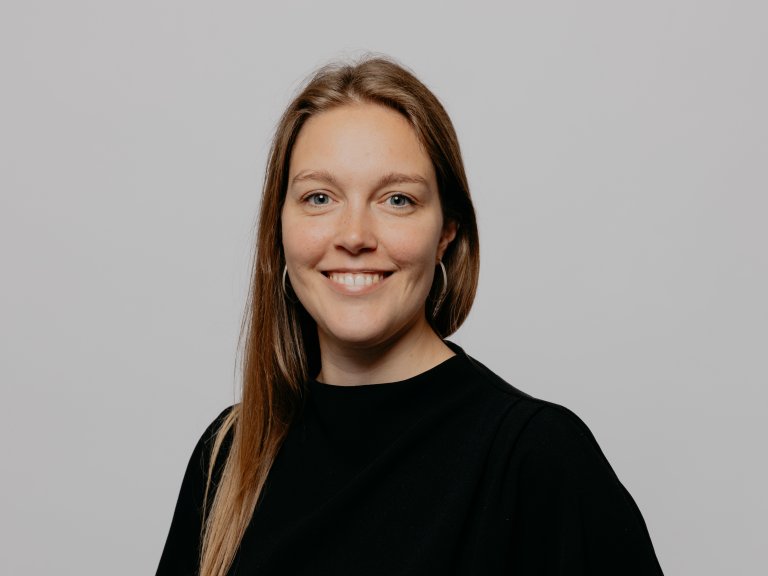
During Postdoc Appreciation Week, we are once again shining a spotlight on the postdoctoral researchers at Amsterdam Cardiovascular Sciences. Postdocs are a vital part of our institute: they contribute to groundbreaking research, mentor young scientists, and bring new perspectives. In this series of short articles, we introduce some of our postdocs to you. We asked them about their research, their motivations, and their experiences as postdocs. Get to know the people behind the science and be inspired by their stories! Today in the spotlight: Signe Mosegaard, former postdoc and now assistant professor at Genetic Metabolic Diseases, who looks back on her postdoc years and her transition to her current role.
What impact do you hope your research will have on the field of cardiovascular science or on society?
My goal is to contribute to a more precise understanding of energy metabolism–driven cardiac dysfunction. Multi-omics approaches allow us to detect subtle molecular changes long before symptoms appear, offering opportunities for risk stratification and targeted interventions. For society, the impact lies in improving care for patients with rare metabolic diseases, who often face delayed recognition and limited treatment options.
How do you look back on your postdoc trajectory? What did you enjoy most or find most challenging about working as a postdoc?
When I look back on my postdoc years, I see a period of big scientific growth but also big personal change. I loved the freedom to explore ideas, build collaborations, and mentor students. At the same time, it was also the phase in life where I was settling down, building a home, and starting a family. That brings a different kind of responsibility and joy, and it made me realize how important it is not to let work take over everything. Finding space for both science and family wasn't always easy, but learning to protect that balance has been one of the most valuable lessons.
How do you experience the transition to assistant professor, and do you have any tips for other early-career researchers?
For me, the transition from postdoc to assistant professor feels less like a sharp step and more like a gradual shift. The roles blur a bit: many responsibilities are familiar, but there is a clear increase in expectations. I enjoy having more space to shape my own research line and to support younger researchers, and it's motivating to see long-term plans start to take form. At the same time, this phase comes with new layers of responsibility: thinking strategically, planning ahead, and balancing scientific ambitions with the realities of academic life.
My tip for early-career researchers is to be honest about what you need to thrive both scientifically and personally, but also to find colleagues, networks, and mentors with whom you can share your daily challenges, successes, and frustrations.
Postdoc appreciation week
This week (21–25 September), the Netherlands is hosting the second edition of Postdoc Appreciation Week NL (PAW_NL).
Events are taking place across the country. This is your opportunity to connect, learn, and celebrate the contributions of postdoctoral researchers at both local and national level.
The program of events at Amsterdam UMC can be found on the Postdoc Network Amsterdam UMC website.
