

At the Amsterdam Institute for Immunology and Infectious Diseases (AI&I), vaccination is one of three key research pillars, alongside PAIS and Immunomonitoring. Regularly, we highlight one of these areas, exploring essential knowledge, challenges, and real-world impact. In Q3 2026, our focus is on Vaccination. In collaboration with AI&I researcher Dr. Kwinten Sliepen, we share the story of how vaccination research at AI&I is making a difference.
Vaccines are substances designed to stimulate immunity against specific diseases or pathogens. By exposing the immune system to a weakened or inactive part of a pathogen, vaccines train the body to recognize and destroy it. Vaccination is considered one of the most successful medical interventions, saving an estimated 150 million lives in the past 50 years. Continued research into novel vaccines is vital for saving and improving millions more lives.
Addressing a silent killer: Hepatitis C
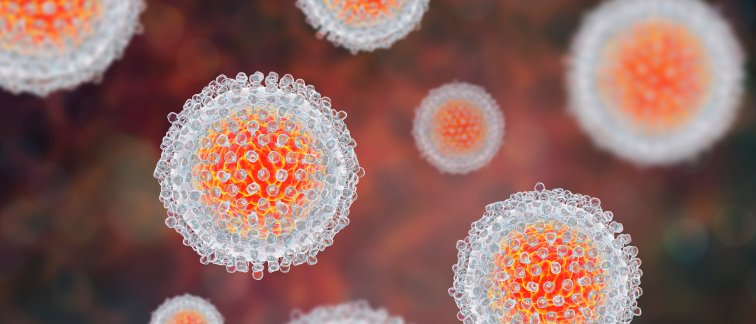
Dr. Sliepen’s research tackles a pressing societal problem: hepatitis C virus (HCV) infection. While effective vaccines exist for hepatitis A and B, there is still no vaccine for HCV, a virus transmitted via blood (e.g. unsafe medical practices, injecting drug use, or sexual transmission) and often undetected due to mild initial symptoms. As a result, many unknowingly spread HCV, which currently infects around 50 million people worldwide. The research team of Dr. Sliepen is working to develop a vaccine targeting the E1E2 protein on the virus’s outer membrane, the only target for neutralizing antibodies.
Although curative therapies for HCV have been available for over a decade, global infection rates remain high. Barriers include lack of access to testing and treatment, high costs, and the fact that HCV disproportionately affects vulnerable populations such as injecting drug users. Moreover, HCV evolves rapidly, resulting in enormous sequence diversity that far exceeds that of SARS-CoV-2, for example. Treating an initial HCV infection does not prevent reinfection with one of the many other circulating strains.
An effective vaccine should induce special antibodies that can neutralize (almost) all circulating HCV strains. Previous research, also including work from Amsterdam UMC by Dr. Schinkel and colleagues, has shown that some individuals naturally develop such ‘broadly neutralizing antibodies’ in response to HCV infection. These antibodies can prevent reinfection and, in some cases, even clear an ongoing infection.
Dr. Sliepen: ‘Our main goal is to elicit these broadly neutralizing antibodies through vaccination to prevent HCV (re-)infection, in theory, such a vaccine could even be used therapeutically. Targeted use of an effective vaccine would prevent the spread of HCV, safe countless lives, and significantly lower cost of treatment for infected individuals’.
Real-world challenges and real-world data
Regrettably, vaccine research faces significant funding challenges, especially in recent years. Specifically for HCV, the availability of effective therapy, which we now know is insufficient for global HCV elimination, decreased the interest in developing a vaccine. This resulted in further underfunding compared to efforts against HIV-1 or malaria. Fortunately, Dr. Sliepen’s work has been supported by Coefficient Giving, enabling progress despite broader funding difficulties.
Clinical cohorts at Amsterdam UMC, including the Amsterdam Cohort Studies and the MOSAIC cohort, have been instrumental for Dr. Sliepen’s research. Antibody and viral sequences from these cohorts allowed the team to reconstruct an antibody-E1E2 complex and, using cryo-electron microscopy, solve the first atomic structure of E1E2. This breakthrough provided structural information necessary for designing new vaccines and tools to study HCV biology.
Collaboration and co-creation
Collaboration is central to this research. Dr. Sliepen works closely with Dr. Schinkel and Prof. Sanders at Amsterdam UMC, and with international partners including CEA in Paris for non-human primate studies, the Shattock lab at Imperial College London for generating mRNA vaccine candidates, Victora lab at Rockefeller and Meuleman lab in Ghent for mouse immunization studies, and King lab in Seattle for immunogen design. Specialized analyses are performed with the Ward lab in San Diego and Crispin lab in Southampton. ‘Solving the E1E2 structure was only possible through close collaboration,’ Dr. Sliepen notes.

‘Solving the first structure of E1E2 may be my most significant societal contribution so far, and I hope it will have great impact in the future.’
From discovery to application
Joan Capella-Pujol, who started as a PhD student and is now a postdoc, used the atomic structure of E1E2 as a blueprint to introduce stabilizing amino acid mutations, yielding the design of stable, soluble mimics of E1E2 that are suitable as vaccine components. When Joan left for a research internship in Seattle, new PhD student Fabian Mulder continued the project, and applied these designs to generate immunogens from different HCV strains. Pre-clinical immunizations demonstrate that these antigens are promising vaccine candidates. With support from IXA, a patent has been filed, and the work is accepted in principle at a peer-reviewed journal.
In the meantime, PhD student Laura Radić used the E1E2 mimics to characterize engineered bispecific antibodies that bind two different targets on E1E2 simultaneously, demonstrating that these antigens are also useful biochemical and immunological tools. Recently, Dr. Laura Radić and Dr. Hendrik Brink (postdoc in the Joke den Haan group) acquired an AI&I collaboration grant to explore if targeting E1E2 to CD169-expressing cells improves anti-HCV immune responses. ‘Having these E1E2 mimics at hand opens the door to numerous novel applications. We are now using these antigens to isolate new antibodies from infected individuals to gain deeper insight into HCV infection,’ Dr. Sliepen mentions. Together, these efforts have helped establish Dr. Sliepen’s group as one of the leading HCV vaccine development groups worldwide.
‘The soluble E1E2 protein our group generated allowed me to study the mechanisms of action of my anti-HCV bispecific antibodies. These antibodies could be developed further as novel therapeutics for HCV, but also used as tools for further improvement of our E1E2 vaccines.’
In summary, the E1E2 structure has sparked renewed interest in HCV vaccine development. Currently, scientific research organizations benefit most from these advances, as the E1E2 mimics allow design of better vaccines and also help with investigating antibody responses in HCV-infected individuals. The next goal is to conduct phase I clinical trials with these mimics as a vaccine. ‘The fundamental understanding of E1E2 structure will hopefully result in an effective vaccine and ultimately benefit individuals vulnerable to HCV infection,’ says Dr. Sliepen.
Key News from the Sliepen lab:
AII Postdoc grant result: Possibility for hepatitis C vaccine in sight by unraveling the spike structure: Dr. Sliepen: ‘The structure of the spike protein has been a mystery for years. This discovery enables molecular insight into the entry of the hepatitis C virus, therefore allowing us to start designing a vaccine.'
In the Spotlight January 2024: AII Prizes, Grants, and Appointments: Dr. Sliepen (grant-PI), Prof. Sanders (co-PI), and Dr. Schinkel (co-PI) have recently secured a substantial $3,464,862 grant over three years from Open Philanthropy to work on a hepatitis C virus (HCV) vaccine. The grant will specifically fund the design and preclinical testing of promising vaccine candidates.
Scaling up and support
The vaccine has so far been tested in preclinical models. The next step is human trials, requiring GMP-grade production, a costly but necessary process. Additional research is needed to optimize vaccine strategies. Dr. Sliepen: ‘To address the enormous diversity of HCV, we have explored the use of mosaic nanoparticle vaccines in earlier work. Another strategy we are pursuing is so-called germline-targeting, immunogens that activate rare B cells capable of producing broadly neutralizing antibodies, an approach pioneered in HIV-1 vaccine research and promising for other diverse viruses.‘Convincing pharmaceutical companies to invest may be challenging given the profitability of existing HCV treatments’, Dr. Sliepen notes. Phase III clinical trials are also very expensive. Because of the availability of effective HCV treatment, several groups are instead developing a controlled human infection model (CHIM), in which volunteers receive a vaccine candidate or placebo and are subsequently challenged with infectious HCV. Participants are closely monitored and treated after a few months. These CHIM trials require fewer volunteers, are faster and are therefore far less costly than large phase III trials.
Want to learn more about CHIMs? Read our article “Would you deliberately get infected for science?”. The article explores the experiences of three healthy volunteers who participated in CHIMs: two in the tick challenge model at Amsterdam UMC, and one in a COVID‑19 CHIM after connecting with the volunteer organization 1DaySooner.
Finding investors can be challenging, especially in the early stages. One promising route is the National INFECT‑TT program, which invests a total of €7 million in accelerated clinical product development for infectious diseases.
Within this program, pillar 1 provides €1 million in vouchers to support preclinical academic innovations on their way towards spin‑outs or startup formation. Each proposal can receive up to €57,000 in vouchers, and researchers are supported by business developers from the participating university medical centers.
In addition, the IDIF investment fund (pillar 2) offers approximately €6 million for early‑stage investments in startups, with individual investments of up to €1.5 million per company. This structure creates a continuum from preclinical innovation support to substantial early‑stage investment, helping promising infectious disease innovations move more effectively towards the market.
AI&I has supported Dr. Sliepen’s work through research grants, including a postdoc grant. Furthermore, the expertise gained from previous HIV-1 vaccine trials at Amsterdam UMC will be invaluable for future HCV vaccine trials.
Ethical and societal impact
Dr. Sliepen hopes his research will improve quality of life, especially for those at highest risk of HCV who lack access to treatment. ‘Meaningful research is any research that expands our understanding of the world around us,’ he reflects.
The aspiration is clear: to see the HCV vaccine candidate tested in the clinic, transforming fundamental discoveries into real-world solutions. Dr. Sliepen: ‘Solving the first structure of E1E2 may be my most significant societal contribution so far, and I hope it will have great impact in the future.’
Discover more articles in this series:Text: Kwinten Sliepen and Esmée Vesseur