

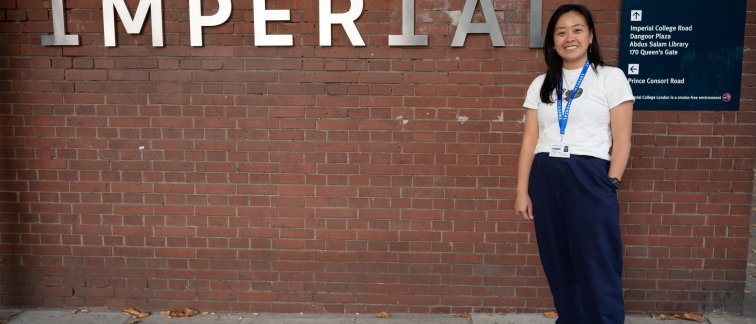
The Amsterdam institute for Immunology and Infectious diseases (AI&I) is committed to supporting innovative research and fostering international collaboration. In 2025, the AI&I International Work Visit Grant enabled research technician Meliawati Poniman (Department of Medical Microbiology and Infection prevention, Amsterdam UMC) to spend 3.5 months as a Visiting Researcher at Imperial College London, under the supervision of Prof. Robin Shattock.
For Meliawati, this was not only her first time in London, experiencing iconic double-decker buses, West End theatres, and British traditions, but also her first time working in a new institute and adapting to a different research culture in the United Kingdom. Despite an initial challenge with accommodation, the work visit proved to be an invaluable and rewarding experience, both professionally and personally.
Hands-on experience
Meliawati joined Robin Shattock’s lab, one of the key partners in the Hepatitis C (HCV) vaccine consortium led by Kwinten Sliepen. As a pivotal member of Kwinten Sliepen's group, Meliawati focuses on optimizing the delivery and presentation of RNA-based HCV vaccine. Her work is strongly inspired by the research of Robin Shattock’s lab, renowned for his contributions to RNA vaccination strategies.
Her goal was to gain hands-on experience in designing, generating, and formulating RNA vaccines in lipid nanoparticles (LNPs), a cutting-edge vaccine platform technology. Through direct interaction with RNA and lipid experts, Meliawati expanded her knowledge and contributed to advancing the HCV mRNA vaccine research project.
Under Robin Shattock’s guidance and with the direct support from his research associates and PhD students Meliawati was involved in every step, from preparing RNA vaccines to coordinating a small-scale preclinical study. Her technical skills were warmly celebrated, making the experience both highly productive and educational.
Bridging expertise
At Amsterdam UMC, Meliawati and her co-workers had developed and selected several HCV E1E2-based antigens. E1E2 is a glycoprotein complex on the surface of the virus and represents the only target for broadly neutralizing antibodies. During her visit, she incorporated these antigens into RNA cassettes and learned to design cloning experiments using Golden Gate assembly, a new technique for her alongside the RNA vaccine production processes. She successfully synthesized multiple RNA constructs, generating ample material for characterization and LNP formulation in a single run. Subsequently, she quickly mastered the formulation procedures and tackled lipid biochemistry challenges as they arose.
The preclinical study testing these HCV RNA-LNP vaccines was ongoing when Meliawati left London. She was pleased to hear that the experiment yielded a positive E1E2-specific T-cell response, validating the use of RNA as an advantageous vaccine platform for HCV. On its own the E1E2 antigen is intrinsically a poor inducer of T-cell response. Motivated by these results, Meliawati continues her project at Amsterdam UMC, now investigating the antibody response in mice serum. Her expanded technical expertise enables her to produce more mRNA vaccines in-house for future preclinical studies.
Knowledge exchange
Representing Kwinten Sliepen’s group, Meliawati presented Amsterdam UMC’s work and discussed her ongoing project with Robin Shattock’s lab. The session generated valuable input and sparked new ideas for HCV vaccine development. Exposure to world-leading academic environments beyond her usual setting provided fresh perspectives and inspired further innovation. Although her lab has developed an E1E2 antigen with great potential as a vaccine candidate, further research on delivery platform and antigen presentation remains essential to maximize its efficacy as HCV vaccine. This is particularly important, as HCV vaccination aims to prevent chronic infection and reinfection across diverse HCV genotypes.
Meliawati also attended an RNA vaccine symposium at Imperial College’s vaccine hub, learning about recent advances such as nucleotide optimization, RNA cassette design for targeted immune responses, innovative lipid molecules for RNA-LNP stabilization, and quality-by-design approaches in manufacturing. She found these insights particularly valuable for shaping her future thinking on RNA vaccine design and deployment strategies against HCV.
Growth
Beyond technical skills, the work visit allowed Meliawati to use and enhance her soft skills. The opportunity to directly collaborate across institutes, communicate for impact, and build new relationships were invaluable. Leading her own research project in a new environment helped her professional agility and encouraged reflection on her future career path.
Meliawati highly valued this experience and encourages other researchers, including technicians, to take advantage of work visit opportunities, as they offer both scientific and personal development.
For more information contact Meliawati Poniman (m.poniman@amsterdamumc.nl).
Text: Meliawati Poniman and Esmée Vesseur
Learn more about our AI&I Work Visit Grant recipients:
Work Visit Grant / Svearike Oeverdieck’s Experience at the University of Washington (March 2026)
Work Visit Grant / Nicholas Pucci’s Research on Antimicrobial Resistance in Tokyo (August 2025)
Work Visit Grant / PhD Candidate Pien van Paassen Visits Murdoch University in Perth Australia (June 2025)