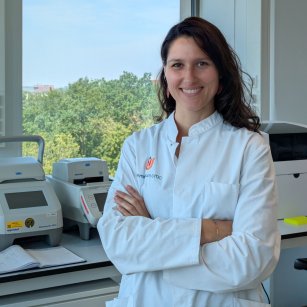
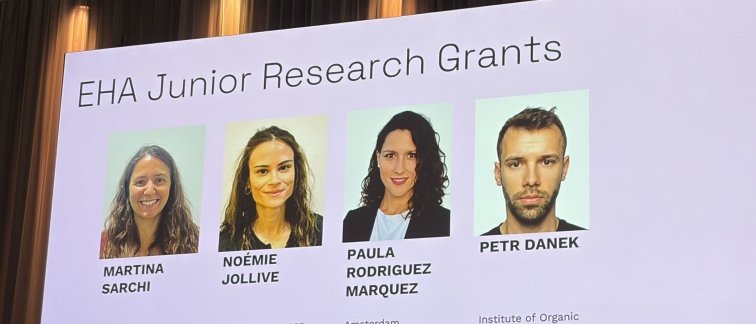
Postdoctoral researcher Paula Rodrigues Marquez has been awarded a prestigious Junior Research Grant from the European Hematology Association (EHA) to investigate why some patients develop severe blood-related side effects after CAR-T cell therapy. The grant will support Rodrigues Marquez, who joined the Department of Hematology at Amsterdam UMC and the Cancer Center Amsterdam (CCA) on 20 April 2026, in carrying out an ambitious three-year research project aimed at making this innovative cancer treatment safer.
Understanding CAR-T-associated hematotoxicity
CAR-T cell therapy has transformed the treatment of several blood cancers. Despite its remarkable success, some patients develop prolonged CAR-T-associated hematotoxicity after treatment. These patients experience severe and long-lasting reductions in blood cell counts, particularly neutrophils, leaving them at increased risk of serious infections and significantly affecting their recovery.
Rodrigues Marquez aims to understand why this complication occurs and how it can be prevented. Using an innovative human 3D bone marrow model that recreates the complex environment in which blood cells are produced, she will investigate how CAR-T cells and the inflammatory signals they generate affect healthy bone marrow cells and disrupt normal blood cell formation.
By combining findings from this model with patient samples and advanced single-cell analyses, the project aims to uncover the biological mechanisms driving CAR-T-associated hematotoxicity and identify new strategies to prevent or reduce this serious side effect.
Towards safer CAR-T cell therapy
Beyond improving our understanding of this complication, the project aims to identify opportunities for future therapeutic interventions. A better understanding of the mechanisms underlying prolonged hematotoxicity could pave the way for treatments that prevent or reduce prolonged neutropenia and the associated risk of severe infections.
Ultimately, these insights could improve patients’ quality of life and enable more people to benefit from the full potential of CAR-T cell therapy.
Prestigious support for innovative research
The EHA Junior Research Grant provides Rodrigues Marquez with the opportunity to carry out this project and generate the data needed to better understand CAR-T-associated hematotoxicity and explore potential therapeutic solutions.
Beyond the financial support, the grant is an important recognition of the scientific and clinical relevance of the project and provides a strong foundation for future research aimed at improving the safety of CAR-T cell therapies.